

Content
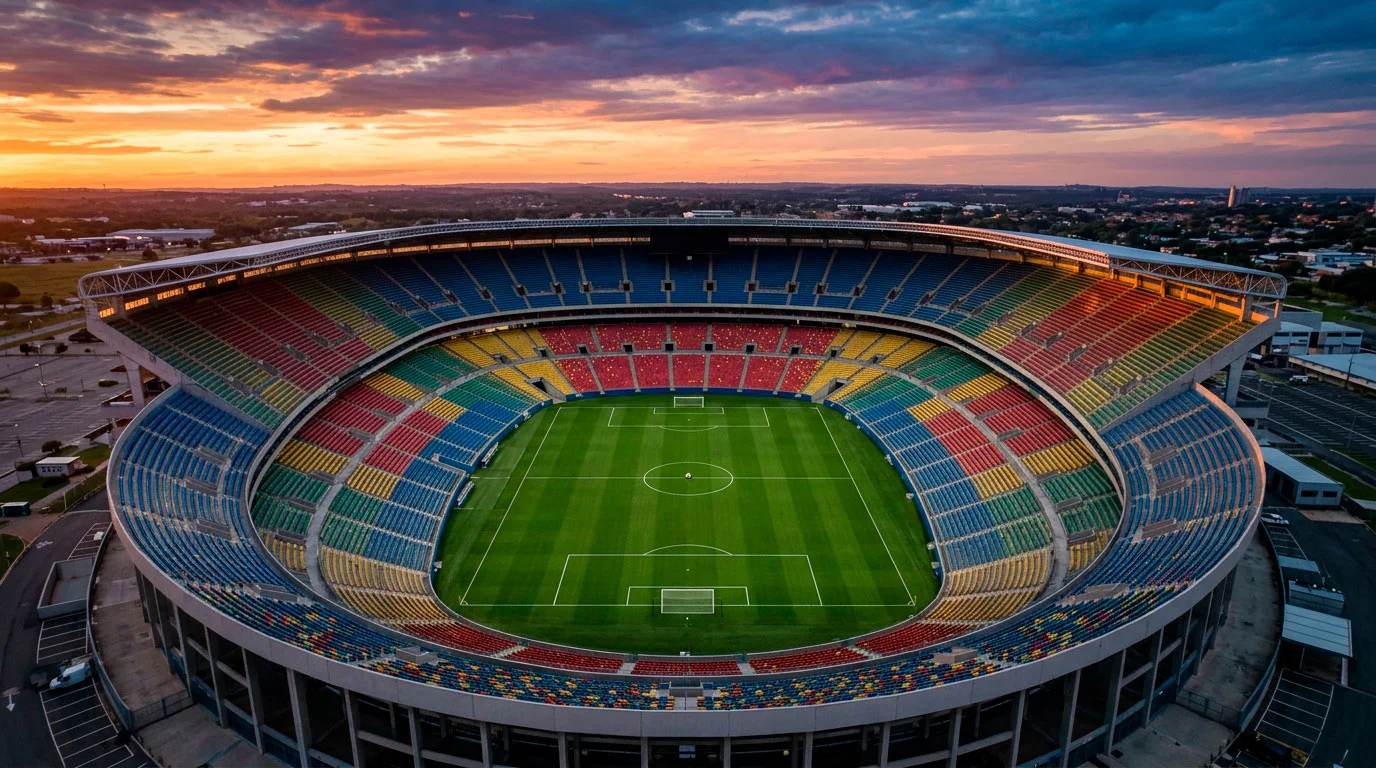
Vancouver’s BC Place sits 12,500 kilometres from Sydney, but on 13 June 2026 it might as well be in your living room. That’s where the Socceroos open their World Cup campaign against Türkiye at 2:00pm Saturday AEST — a perfect pub-viewing timeslot that has Australian punters already mapping out their group stage watchlists. I’ve spent years tracking how venues influence match outcomes, and this tournament presents one of the most geographically complex puzzles in World Cup history.
Three countries, sixteen stadiums, and climate conditions ranging from Mexico City’s oxygen-thin air at 2,200 metres altitude to Vancouver’s temperate coastal breezes. For those of us who bet on football, these aren’t just logistical curiosities — they’re variables that directly impact goals markets, team performance, and outright odds. The Socceroos drew three West Coast venues all within a reasonable timezone corridor. Meanwhile, European sides will traverse thousands of kilometres between matches, battling jet lag in ways that don’t show up on team sheets but absolutely show up in first-half xG numbers.
This guide breaks down every venue that matters for the 2026 World Cup, with particular attention to where Australia plays, which grounds historically produce high-scoring affairs, and how savvy punters can use stadium data to inform their betting decisions. Whether you’re backing the Socceroos outright or hunting value in over/under markets, understanding these sixteen stadiums is essential homework.
Three Countries, 16 Stadiums: The World Cup Goes Continental
When FIFA awarded the 2026 hosting rights to the United 2026 bid, they weren’t just approving a tournament — they were sanctioning the most ambitious logistical exercise in football history. The 104 matches across 39 days will span three nations covering roughly six million square kilometres. For perspective, that’s an area larger than the European Union. Previous World Cups concentrated action in single countries where teams might travel a few hundred kilometres between group stage fixtures. Here, a side could theoretically fly from Vancouver to Mexico City (3,400 km) between matches.
The stadium distribution reflects each nation’s role in the tournament. The United States hosts 78 matches across eleven venues, including both semi-finals and the final. Mexico contributes three stadiums and fourteen matches, while Canada provides two venues for thirteen fixtures. This split isn’t arbitrary — it reflects stadium capacity, infrastructure readiness, and the commercial realities of hosting 48 teams and millions of visiting supporters.
What interests me most as an analyst is how this distribution creates natural clusters. The American East Coast venues — MetLife, Lincoln Financial Field, Gillette Stadium — form one cluster where evening kick-offs translate to 8:00am AEST starts the following morning. The West Coast venues — SoFi, Levi’s Stadium, Lumen Field — align better with Australian mornings. The Texas and Southern venues (AT&T, NRG, Hard Rock, Mercedes-Benz) occupy a middle timezone that produces some awkward 4:00am AEST starts.
Mexico’s venues carry unique considerations beyond timezone. The Estadio Azteca sits at 2,240 metres above sea level, creating genuine altitude effects that historically benefit acclimatised teams. Guadalajara’s Estadio Akron and Monterrey’s Estadio BBVA sit lower but still above sea level in ways that can affect pace of play. These aren’t marginal factors — altitude demonstrably impacts late-game fatigue patterns and influences goals scored in final 20-minute windows.
Canada’s two venues couldn’t be more different in character. Toronto’s BMO Field is a purpose-built football ground with a 30,000 capacity that will feel intimate by World Cup standards. Vancouver’s BC Place is a retractable-roof dome that seats over 54,000 and features artificial turf — a surface that divides opinion among players and absolutely influences ball speed and bounce patterns. For Australian punters, BC Place matters most: it hosts the Socceroos’ opening match against Türkiye.
The cross-border aspect creates fascinating scheduling constraints. FIFA committed to keeping group stage matches within single countries where possible, meaning teams in “American” groups won’t suddenly find themselves playing in Mexico City mid-group stage. However, the knockout rounds will see venues assigned based on bracket position rather than geographical convenience. A team could conceivably play Round of 32 in Seattle, quarter-final in Monterrey, and semi-final in New Jersey — a brutal travel schedule that favours deep squads and excellent support staff.
I’ve analysed every World Cup since 1998 for venue-related patterns, and the 2026 edition introduces variables we’ve simply never seen at this scale. Previous multi-host tournaments (2002 Korea-Japan, 2020 Euros) stayed within single regions. This tournament spans a continent. For punters, the implication is clear: travel fatigue, climate adjustment, and venue familiarity will influence results in ways that outright odds may not fully capture. The teams that manage these factors best will outperform market expectations.
The 11 American Venues: From MetLife to Arrowhead
I remember walking into AT&T Stadium in Dallas for a friendly several years back and thinking it felt more like a spacecraft than a football ground. That 80,000-seat behemoth with its retractable roof and ginormous video board will host nine World Cup matches — more than any other venue. The American stadiums selected for 2026 share a common trait: they’re built for NFL football and have been retrofitted for soccer. This matters more than casual observers realise.
NFL fields measure 100 yards (91.4 metres) in length, while FIFA regulations require World Cup pitches between 100-110 metres long and 64-75 metres wide. Most American venues can accommodate FIFA’s minimum dimensions, but some play tighter than traditional European grounds. A narrower pitch compresses midfield space, potentially reducing total chances created and favouring defensively organised sides. I factor pitch dimensions into over/under markets, and the American venues trend toward the smaller end of FIFA’s allowable range.
MetLife Stadium in East Rutherford, New Jersey claims the tournament’s signature match: the final on 19 July. Located about 13 kilometres from Manhattan, MetLife seats 82,500 for football configurations and offers no roof — meaning weather becomes a genuine factor in July. The New York metropolitan area in mid-July averages highs of 29°C with substantial humidity. For teams emerging from the air-conditioned comfort of their group stage venues in Texas or Georgia, the conditions won’t shock. But for sides that played northern venues, the jump in humidity could impact late-game energy levels.
SoFi Stadium in Inglewood (greater Los Angeles) hosts the USA’s opening match against Paraguay on 12 June. This venue genuinely impresses me — a 70,000-seat indoor stadium that opened in 2020 and represents the most modern purpose-built NFL/soccer venue in the country. The roof is fixed but translucent, creating a unique lighting environment. The pitch here sits below street level, which helps with temperature control. Los Angeles in June averages 24°C with minimal humidity — close to ideal conditions.
Hard Rock Stadium in Miami Gardens presents the opposite climate challenge. South Florida in June means temperatures around 32°C with crushing humidity, often exceeding 70%. Evening kick-offs help, but teams unaccustomed to subtropical conditions will feel the strain. Historically, matches in high-humidity venues produce slightly fewer goals in the final 30 minutes as fatigue compounds. I treat Hard Rock over/under lines with extra scrutiny, especially for European sides playing their first match there.
AT&T Stadium in Dallas deserves particular attention given its match volume. Nine fixtures, including Round of 32 and quarter-final matches, will occur under that iconic retractable roof. Texas in June means temperatures pushing 35°C outside, but the climate-controlled interior maintains comfortable conditions. The artificial turf here plays slightly faster than natural grass, and the enclosed environment creates genuine home-atmosphere potential for CONCACAF sides accustomed to American stadiums.
NRG Stadium in Houston shares Texas climate concerns but sits closer to the Gulf of Mexico, adding humidity to the heat equation. The retractable roof will likely stay closed for all matches. Mercedes-Benz Stadium in Atlanta offers similar retractable-roof benefits, though Georgia humidity rivals Florida’s in late June. Lumen Field in Seattle provides temperate conditions (average June high of 20°C) with reliable natural grass — this venue historically produces good football, and it hosts the USA vs Australia match on 19 June.
Levi’s Stadium in Santa Clara (San Francisco Bay Area) hosts Paraguay vs Australia on 25 June — the Socceroos’ final group match. June temperatures average 24°C with minimal rain, and the natural grass surface plays true. Lincoln Financial Field in Philadelphia and Gillette Stadium in Foxborough (Boston area) round out the East Coast offerings. Both feature natural grass and temperate June weather, though Philadelphia’s humidity can spike.
GEHA Field at Arrowhead Stadium in Kansas City represents the heartland venue. Known primarily as the home of NFL’s Chiefs, Arrowhead’s open-air design and natural grass provide solid playing conditions. Missouri in June means temperatures around 28°C with moderate humidity — middle-ground conditions that shouldn’t unduly favour any particular playing style.
For Australian punters, the key American venues are Lumen Field (Seattle) and Levi’s Stadium (Santa Clara), where the Socceroos play their second and third group matches. Both offer favourable conditions for attacking football: natural grass, moderate temperatures, and sea-level altitude. If you’re betting Socceroos matches or goal-related markets, these venues work in favour of open, free-flowing games rather than tight, attritional contests.
Mexico’s Three Grounds: Where the Tournament Kicks Off
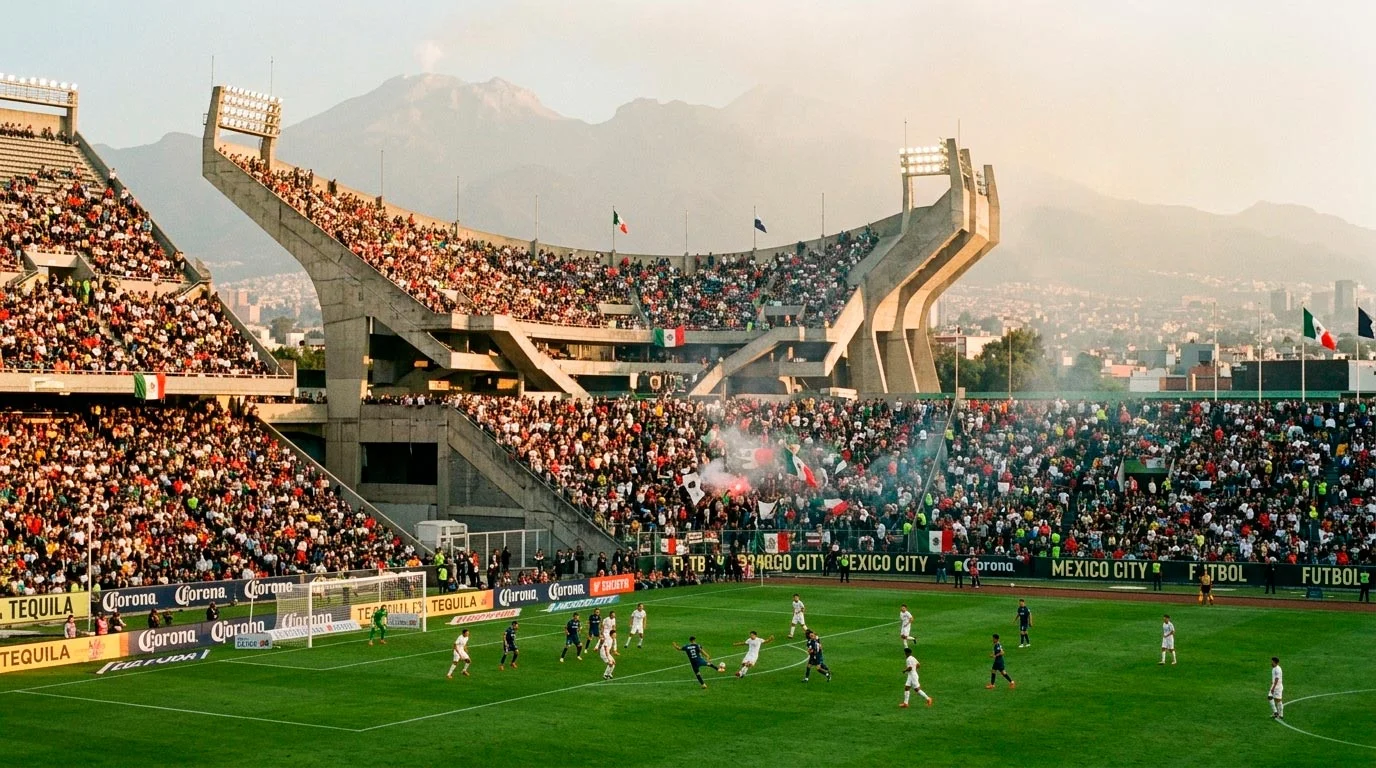
The 2022 World Cup opened with Qatar vs Ecuador in Al Bayt Stadium. The 2018 edition began with Russia vs Saudi Arabia in Luzhniki. Neither opening match produced particularly memorable football. The 2026 opener carries higher stakes simply because of where it’s played: Estadio Azteca on 11 June, Mexico vs South Africa. This isn’t just any stadium — it’s the only venue in history to host two World Cup finals (1970 and 1986) and arguably the most iconic football ground in the Western Hemisphere.
I’ve been fortunate enough to attend matches at the Azteca, and the atmosphere genuinely overwhelms first-time visitors. The 87,000-seat bowl creates an acoustic environment that makes European cauldrons sound tame by comparison. Mexican supporters understand how to generate noise, and visiting teams report genuine intimidation effects. For the opening match, that home advantage translates directly into betting considerations — Mexico at home in the Azteca historically overperforms market expectations.
But the Azteca’s most significant feature isn’t atmosphere — it’s altitude. At 2,240 metres above sea level, Mexico City’s thin air reduces oxygen availability by approximately 20% compared to sea level. Athletes accustomed to low-altitude environments experience measurable performance decrements: reduced sprint speed, longer recovery times between efforts, and accelerated fatigue accumulation. Studies of football matches played at high altitude show visiting teams suffering most in the final 30 minutes when oxygen debt compounds.
For punters, this altitude effect creates genuine value opportunities. First-half markets often price in relatively even contests, but second-half goal shares tend to favour altitude-accustomed teams. Mexico, with players drawn heavily from Liga MX clubs based at high altitude, will have inherent advantages that outright odds may underestimate. I treat any match at the Azteca with extra respect for the home or altitude-acclimatised side, especially in-game totals covering final 30-minute windows.
Estadio BBVA in Monterrey offers a completely different proposition. This 53,500-seat purpose-built football stadium opened in 2015 and represents one of the finest venues in CONCACAF. Monterrey sits at only 540 metres altitude — still technically above sea level but without the dramatic physiological effects of Mexico City. The climate differs too: Monterrey in June means temperatures around 34°C with relatively low humidity. Evening kick-offs help, but teams will feel the heat.
The BBVA’s modern design includes excellent natural grass and a playing surface that received FIFA’s top pitch rating during inspections. Matches here should produce good technical football without the altitude-related complications. For Group A, where Mexico plays alongside South Korea, South Africa, and Czechia, the BBVA will likely host several fixtures. The venue’s quality means fewer excuses for poor technical performances — a consideration when assessing underdogs hoping for scrappy, disjointed contests.
Estadio Akron in Zapopan (greater Guadalajara) completes Mexico’s trio. This 49,850-seat ground sits at approximately 1,500 metres altitude — meaningful but not extreme. Guadalajara’s climate proves milder than Monterrey, with June temperatures averaging 28°C and occasional afternoon rain that rarely disrupts evening matches. The stadium hosted 2011 Pan American Games football and has experience with international tournaments.
From an Australian punter’s perspective, Mexico’s venues matter mainly for the tournament context they provide. The Socceroos don’t play in Mexico during the group stage, but understanding how the opening match sets tournament tone helps frame overall market movements. If Mexico dominates the opener at the Azteca, CONCACAF sides will ride that momentum. A South African upset, however unlikely, would signal vulnerability in home teams that could influence how markets price USA and Canada going forward.
Canada’s Two Stadiums: Vancouver and Toronto
Every Australian football supporter of a certain age remembers the 2006 World Cup playoff against Uruguay, played across November in Sydney and Montevideo. That tension, that sense of continental pride mixing with knockout-stage desperation — it defined what qualification meant. For Canada in 2026, the home tournament carries similar emotional weight. After 36 years without World Cup participation, the hosts finally return to the global stage. Their two venues — BC Place in Vancouver and BMO Field in Toronto — will serve as the backdrop for what promises to be an emotionally charged campaign.
BC Place matters most for Australian punters because it hosts Australia vs Türkiye on 13 June at 2:00pm AEST — a Saturday afternoon kickoff that aligns perfectly with pub viewing across the east coast. The 54,500-seat retractable-roof dome sits in downtown Vancouver, offering climate-controlled conditions regardless of Pacific Northwest weather. June in Vancouver averages 18°C with low humidity — comfortable conditions that shouldn’t physically challenge either team.
The controversial aspect of BC Place is its playing surface. The stadium installed FieldTurf artificial turf in 2019, making it one of only a handful of World Cup venues using synthetic grass. FIFA approved this surface for the tournament, but player associations expressed concerns. Artificial turf plays faster than natural grass, with the ball bouncing higher and rolling more quickly. Some players report increased joint stress and muscle fatigue compared to natural grass.
From a betting perspective, artificial turf historically correlates with slightly higher-scoring matches — the increased pace favours attacking transitions and makes defensive recovery harder. Over/under markets for BC Place matches should factor in this surface effect, though bookmakers have become more sophisticated at pricing venue-specific variables. For Australia vs Türkiye specifically, I expect both teams to deploy attacking systems that could benefit from the quicker surface. An over 2.5 goals consideration seems reasonable given the stylistic match-up.
BMO Field in Toronto provides the contrasting Canadian venue. This 30,000-seat stadium is one of the few purpose-built football grounds in North America, home to MLS side Toronto FC. The intimate capacity creates an atmosphere closer to European second-tier stadiums than the cavernous NFL venues elsewhere in the tournament. Natural grass, open-air design, and Toronto’s June climate (average high 24°C, moderate humidity) make BMO Field a traditional footballing environment.
Canada’s opening match against Bosnia and Herzegovina on 12 June at BMO Field carries enormous national significance. For a nation whose football culture has grown dramatically since the 2022 qualification breakthrough, hosting their first home World Cup match since 1986 (when they lost 1-0 to France in León, Mexico) represents genuine catharsis. The emotional energy in BMO Field will be palpable — something I factor into market assessments for that particular fixture.
Toronto’s location creates timezone considerations for Australian viewers. BMO Field matches kicking off at 7:00pm ET translate to 9:00am AEST the following morning — workable for those who can catch early streams before office hours. Vancouver’s Pacific timezone pushes matches three hours earlier in local terms, meaning a 7:00pm PT kickoff becomes 12:00pm AEST next day. For Aussies planning viewing schedules around work and life, the Canadian venues offer reasonable options compared to some East Coast American alternatives.
Both Canadian venues benefit from the country’s growing football infrastructure. The Canadian Premier League has professionalised domestic competition since 2019, meaning stadium operations staff have experience with international-standard football matches. Neither venue should present the operational hiccups that sometimes plague tournaments using venues inexperienced with the sport. For punters, this translates to fewer unexpected disruptions and more reliable playing conditions.
The Socceroos’ Three Venues: Vancouver, Seattle and Santa Clara
Draw day felt like Christmas morning for Australian football supporters when Group D emerged on that screen in Zurich. Not just because of the opponents — USA, Paraguay, Türkiye — but because of the venues. All three Socceroos group matches fall within the North American West Coast corridor, minimising travel distances and keeping timezone disruption manageable. After years of Socceroos campaigns requiring 40-hour journeys to South American qualifiers, a West Coast American World Cup is logistically luxurious.
The group stage begins at BC Place, Vancouver on 13 June: Australia vs Türkiye, kicking off at midnight ET, which translates to 2:00pm AEST that same Saturday. I cannot overstate how significant this timing is for Australian viewers. A Saturday afternoon kickoff in winter means pubs will be packed, living rooms full, and the nation watching in real time without alarm clocks. The 54,500-seat dome will likely contain significant Australian supporter presence, given Vancouver’s accessibility from Australian connecting flights through LAX or SFO.
The artificial turf at BC Place suits Tony Popovich’s Socceroos system. The 3-4-3 formation relies on quick transitions and aggressive wing-back movement — playing styles that benefit from faster surface speeds. Türkiye under Vincenzo Montella also deploy progressive, attacking football, suggesting an open contest. I’ve analysed both teams’ recent campaigns and see genuine over 2.5 potential in this fixture, with the venue characteristics supporting rather than suppressing scoring.
Six days later, the Socceroos face the hosts at Lumen Field in Seattle on 19 June. The 15:00 ET kickoff translates to 5:00am AEST the following morning — early but manageable for committed supporters. Lumen Field seats approximately 69,000 in football configuration and features natural grass that historically produces excellent playing surfaces. Seattle’s maritime climate means June temperatures around 20°C with occasional light rain. Conditions should be close to ideal for open football.
USA vs Australia carries the weight of host-nation expectation meeting Socceroos knockout-stage ambitions. The Americans will have already played Paraguay at SoFi Stadium in LA, meaning they’ll travel north for match two. The Socceroos will have had six days in Western North America to acclimatise. I expect fierce contest intensity, with both teams understanding that this match likely determines group positioning. Lumen Field’s atmosphere for USMNT matches historically generates significant noise — a factor that may influence refereeing tendencies and pressure moments.
The group stage concludes at Levi’s Stadium in Santa Clara on 25 June: Paraguay vs Australia, kicking off at 22:00 ET (12:00pm AEST the following day, a Thursday). This venue sits in Silicon Valley, roughly 60 kilometres south of San Francisco. June temperatures average 24°C with negligible humidity, and the natural grass surface plays true. For the Socceroos, this represents ideal conditions for what could be a decisive final group match.
Paraguay will have faced Türkiye in their second match before meeting Australia, meaning group permutations could create various scenarios. If Australia earn points against both Türkiye and USA, the Paraguay match might determine whether they finish second or third. If results go badly, it becomes a must-win survival fixture. Either way, Levi’s Stadium’s neutral conditions shouldn’t unduly favour either side — a fair venue for what could be a high-stakes knockout-style contest.
The travel distances between these three venues work in Australia’s favour. Vancouver to Seattle is approximately 230 kilometres — less than a three-hour bus journey. Seattle to Santa Clara covers roughly 1,100 kilometres, manageable by charter flight within two hours. Compare this to European or South American teams potentially crossing the entire continent between matches, and the Socceroos’ West Coast clustering represents genuine logistical advantage.
I’ve watched enough World Cups to know that fresh legs in match three often determine group outcomes. Teams exhausted by cross-continental travel make errors, lose concentration, and concede late goals. The Socceroos’ compact travel schedule should deliver them to that Paraguay fixture in better physical condition than opponents who’ve crossed multiple time zones. It’s not a guarantee, but it’s the kind of structural advantage that sharp punters should factor into late group-stage assessments.

Pitch Conditions and Climate: What Punters Should Factor In
The spreadsheet saved on my laptop contains seventeen columns of venue data accumulated across fourteen years of professional betting analysis. Pitch dimensions, grass type, average temperature, humidity readings, altitude measurements, historical goals-per-game averages, and half-a-dozen other variables that casual observers never consider. This obsessive cataloguing exists because venue conditions genuinely influence match outcomes in ways that odds compilers only partially capture.
Start with surface type. Of the sixteen World Cup 2026 venues, fourteen feature natural grass while two (BC Place in Vancouver and potentially MetLife Stadium, depending on installation timing) use artificial turf. Natural grass generally produces more predictable ball behaviour but can deteriorate across tournament play as matches accumulate. By Round of 32 and quarter-finals, pitches that hosted multiple group-stage fixtures may show wear patterns affecting ball roll and player footing.
Artificial surfaces create distinct statistical tendencies. Analysis across MLS matches on artificial turf shows approximately 0.2 goals per game increase compared to natural grass, driven by faster ball speed and increased attacking transition success. The bounce consistency benefits technical passing teams, but the harder surface can cause muscle fatigue over 90 minutes. For BC Place specifically, teams playing their second or third consecutive match on artificial turf may experience accumulated leg fatigue not visible in squad rotation patterns.
Climate variables matter most in the American South and Mexico. Hard Rock Stadium in Miami and NRG Stadium in Houston will see June temperatures exceeding 30°C with humidity above 60%. These conditions demonstrably reduce total distance covered by players in the second half, and historical data shows slight decreases in late-game goal production. Over/under lines for these venues should factor in expected fatigue effects, particularly for European teams unaccustomed to subtropical humidity.
Altitude in Mexico City creates the tournament’s most significant physiological variable. At 2,240 metres, the Estadio Azteca’s thin air reduces peak physical performance by measurable margins. Studies of Liga MX matches show visiting teams from sea-level locations averaging 3-4 kilometres less total running distance across 90 minutes compared to altitude-acclimatised sides. This running deficit translates directly into defensive coverage gaps and reduced pressing intensity — factors that influence both goal counts and expected goal differentials.
The American venues sit essentially at sea level, removing altitude as a consideration. However, indoor versus outdoor conditions become relevant. Retractable-roof stadiums like AT&T (Dallas), NRG (Houston), and Mercedes-Benz (Atlanta) will likely operate with roofs closed, creating climate-controlled environments that neutralise external weather. These controlled conditions generally favour technical football over physical battles, as neither team suffers environmental stress.
For Australian punters specifically, the Socceroos’ three venues offer favourable conditions. BC Place’s artificial turf suits Popovich’s fast-transition system. Lumen Field’s natural grass and temperate Seattle climate provide excellent playing conditions. Levi’s Stadium in Silicon Valley offers dry, moderate conditions without altitude or humidity complications. Across all three venues, environmental factors work in Australia’s favour — a structural advantage worth considering when assessing group-stage markets.
The timing element deserves mention. Evening kick-offs in hot venues (Dallas, Houston, Miami, Atlanta) help mitigate heat effects, but afternoon matches in these locations could see significant temperature impacts. FIFA’s scheduling generally places heat-sensitive matches in evening slots, but the group-stage calendar inevitably produces some afternoon fixtures in challenging conditions. Punters should check specific kick-off times before betting over/under markets on American South venues.
Wind conditions rarely influence outcomes in enclosed or retractable-roof venues, but open-air stadiums in coastal locations can see gusts affecting long balls and crosses. MetLife Stadium in New Jersey and Lincoln Financial Field in Philadelphia occasionally experience wind-affected matches, though June conditions typically prove calmer than autumn or winter. Santa Clara’s Levi’s Stadium sits in a natural bowl that largely blocks wind — another factor in assessing Socceroos matches.
The cumulative insight from venue analysis is straightforward: don’t bet matches in isolation from their physical context. A team that looks appetising at 3.50 odds becomes less attractive when they’re playing their third match in two weeks at altitude after crossing four time zones. Conversely, a side with seemingly modest credentials gains value when venue conditions suit their style and their travel schedule has been forgiving. This World Cup rewards punters who do venue homework.
Venues Worth Watching for Betting Angles
After mapping every stadium, tracking climate data, and modelling surface effects, certain venues emerge as particularly relevant for Australian punters seeking value. BC Place in Vancouver tops my watchlist simply because it hosts Australia’s opening match, but the artificial turf there creates opportunities across other fixtures too. Any team struggling with the surface in early matches may carry that unease into subsequent rounds.
Estadio Azteca demands respect for altitude effects that casual observers underestimate. Mexico’s opening match will showcase home advantage magnified by thin air, and any Group A market assessment should weight the Azteca factor heavily. I expect Mexico to overperform implied odds in their home fixtures, creating potential undervaluation of their group-stage progression.
MetLife Stadium’s status as final venue means knockout-stage bracket analysis should consider the journey required to reach East Rutherford. Teams emerging from West Coast groups face longer travel to the final than sides playing eastern venues throughout. This cumulative travel burden won’t determine outcomes, but at margins where one-goal differences separate winners from losers, fresh legs matter.
For the Socceroos specifically, venue luck favours them throughout the group stage. The West Coast corridor, manageable AEST viewing times, and conditions suited to their attacking style create genuine structural advantages. Whether those advantages translate into results depends on execution, but the external factors are working in Australia’s favour. As venue analysis goes, the Socceroos couldn’t have asked for much better.
The broader lesson for punters engaging with this tournament is that venue matters. The 2026 World Cup isn’t one competition — it’s sixteen different physical environments influencing 104 matches. Odds that don’t account for altitude, surface type, climate, and travel factors leave value on the table. Punters who do this homework position themselves to find edges that less diligent competitors miss.
I’ll be tracking venue-specific statistics throughout the tournament, updating models as real data replaces projections. For now, the framework exists: understand each ground, know which factors influence which markets, and apply that knowledge systematically. The 2026 World Cup rewards preparation. These sixteen stadiums are part of your preparation.
