

Content
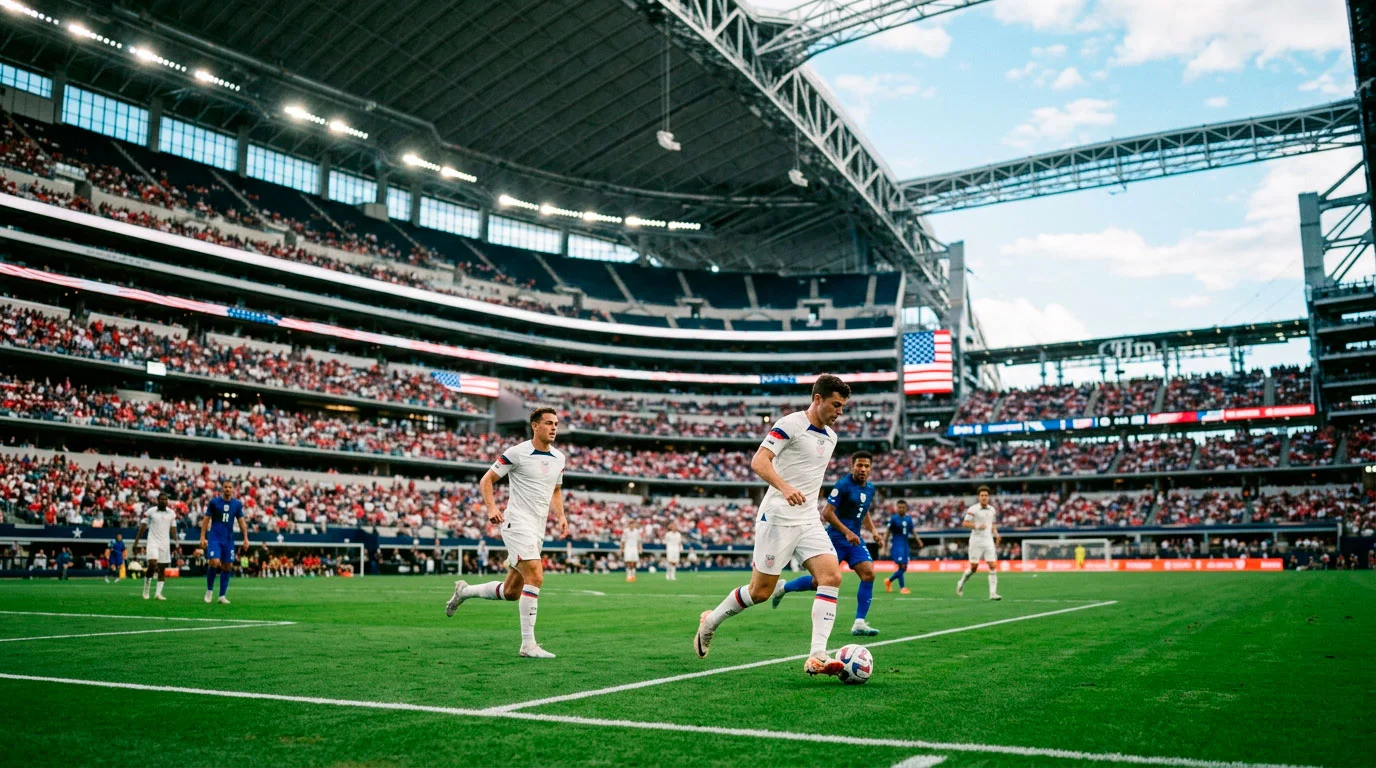
They are hosting the thing, but can they win it? More importantly for every Aussie punter with skin in Group D — can the Socceroos beat them? The United States men’s national team enters the 2026 World Cup as the centrepiece of the biggest sporting event the country has staged since the 1996 Atlanta Olympics, with 11 stadiums, 60,000-seat crowds, and a national media machine that will frame every match as a referendum on American soccer’s place in the culture. For Australia, the USA are not an abstract contender to assess from the outside. They are the opponent on 19 June at Lumen Field in Seattle, at 5:00 am AEST — the match that could define whether the Socceroos progress or pack their bags.
I have been analysing tournament hosts for nearly a decade, and the data is unambiguous: home advantage is real, measurable, and worth approximately 0.4 goals per game in additional attacking output. The USA will benefit from that boost. But home advantage has limits, and those limits are where Australian punters can find value.
Home Soil: How Much Is Host Advantage Worth?
Since 1990, World Cup host nations have a combined group-stage record of 24 wins, 6 draws, and 3 losses — a win rate of 73%. South Korea reached the semi-finals in 2002. Russia reached the quarter-finals in 2018. Even South Africa, the weakest host of the modern era, managed a draw against Mexico and a win over France in the group stage. The historical base rate says the USA will advance from Group D, and it says so emphatically.
But base rates are not predictions. The 2026 tournament is unusual because it has three co-hosts, which dilutes the home advantage compared to a single-host tournament. The USA play their group matches in Los Angeles (SoFi Stadium), Seattle (Lumen Field), and Santa Clara (Levi’s Stadium) — all West Coast venues with large, engaged soccer fanbases but also significant diaspora communities for opposing nations. The Socceroos match in Seattle will feature a substantial Australian contingent alongside the American fans, and the atmosphere may be less one-sided than a match at, say, AT&T Stadium in Dallas where the home crowd dominance would be near-total.
The quantitative analysis of home advantage identifies three components: crowd support (which influences referee decisions and player adrenaline), travel and logistics (the host does not jet-lag), and familiarity with venues and conditions (pitch surface, altitude, climate). For the USA, the first two components are strong. The third is interesting: the USMNT plays most of its home matches at temporary national team venues rather than the NFL stadiums that will host the World Cup, so their familiarity with the actual playing surfaces is limited. Several venues use artificial turf (including Lumen Field in Seattle, where the Socceroos match takes place), which introduces a variable that favours teams accustomed to synthetic surfaces over natural grass.
My estimate of the USA’s home advantage adjustment: +0.3 goals per game for group-stage matches, declining to +0.2 in the knockout rounds as the tournament atmosphere neutralises and opposing fanbases grow louder. That adjustment is meaningful but not transformative. It turns a 50-50 match into a 58-42 match — noticeable but not insurmountable. For Aussie punters, the implication is clear: the USA will be favourites in every group match, but the market may overprice the home advantage, particularly against well-organised opponents like Australia who have tournament experience and will not be intimidated by crowd noise.
USMNT Squad Watch: Pulisic, McKennie and the MLS Core
The USMNT squad blends European-based talent with a growing MLS contingent, and the balance between those two pools will shape the team’s identity at the World Cup. Christian Pulisic, operating as the attacking fulcrum from the left wing or the number 10 position, is the most important player in American soccer history — a statement that reflects both his individual talent and the relatively shallow pool of true world-class Americans who have preceded him. Pulisic’s club form across the 2024-25 season has been his best in years, with double-digit goals and assists in a major European league, and his ability to produce in big matches (the 2022 World Cup goal against Iran, the Champions League semi-final goals) gives the USA a genuine match-winner.
Weston McKennie anchors the midfield with a combination of energy, aggression, and positional versatility that makes him the engine of the American system. McKennie covers more ground per 90 than any other USMNT outfield player — 12.1 km on average — and his willingness to make recovery runs that more talented players would skip provides the defensive foundation that allows Pulisic and the attacking players to operate with freedom. Tyler Adams, if fit, provides the holding role behind McKennie, but his injury history has been a persistent concern throughout the World Cup cycle. If Adams is unavailable, the USA’s midfield balance shifts significantly, and the defensive cover in front of the back four becomes less reliable — a factor that could influence the over/under line in matches where the USA are expected to dominate possession.
The MLS core brings its own advantages. Players like the potential centre-forward options and defensive midfielders from the domestic league understand the conditions, the venues, and the energy of American crowds in a way that European-based players cannot. MLS players are also accustomed to playing in extreme heat and humidity — a factor that could be decisive in group matches scheduled at southern venues during peak summer. The downside is that MLS is not the Premier League or La Liga, and the step up in quality from MLS to a World Cup knockout match is significant.
Defensively, the USA’s back four has been a work in progress throughout the qualifying cycle. The centre-back partnership has rotated frequently, and no pairing has established the kind of understanding that Argentina’s Romero-Martínez or France’s Saliba-Upamecano partnerships offer. The full-back positions are stronger — Sergiño Dest on the right provides attacking width, and Antonee Robinson on the left is one of the most underrated defenders in the Premier League. But the central defensive vulnerability is real, and opponents who can isolate the American centre-backs in transition situations — as the Socceroos’ 3-4-3 system is designed to do — will create chances.
USA in Group D: The Socceroos Matchup
Group D is the most interesting group in the tournament from an Australian perspective, and the USA’s position within it is simultaneously the most predictable (they will be favourites to top the group) and the most volatile (the home advantage pressure could work against them if results do not go to plan early).
The USA’s opening match against Paraguay at SoFi Stadium in Los Angeles will set the tone. A comfortable win — 2-0 or better — will settle the nerves, validate the hype, and allow the coaching staff to approach the Australia match with confidence. A draw or defeat against Paraguay would introduce panic into the American media cycle, and the pressure on the USA-Australia match would intensify to a point where the home crowd’s energy could become anxiety rather than support. For Socceroos punters, monitoring the USA’s opening result is critical: a USA win over Paraguay shortens their odds in the Australia match to the point where value disappears. A USA draw or loss opens up the market.
The USA vs Australia match in Seattle on 19 June will be played at 3:00 pm local time — early evening energy from the crowd, cooler Pacific Northwest conditions, and an artificial surface that both teams will need to adjust to. The Socceroos’ experience on synthetic pitches in the A-League (several Australian venues use hybrid or artificial surfaces) could neutralise one of the USA’s supposed familiarity advantages. Lumen Field seats 69,000, and the enclosed design amplifies crowd noise — but noise affects both sides, and Popovich’s Australian squad has proven it can handle hostile atmospheres throughout AFC qualifying.
From a tactical perspective, the USA’s 4-3-3 against Australia’s 3-4-3 creates an interesting structural mismatch. The USA’s wide forwards will face Australian wingbacks in one-on-one situations, which should favour the Americans in terms of individual quality. But Australia’s three centre-backs provide numerical superiority against the USA’s single striker, and the wingbacks’ defensive recovery runs should limit the space available for Pulisic to exploit on the counter. The tactical chess match will likely produce a tight, cagey affair — which is why I favour under 2.5 goals in this fixture despite both teams’ attacking intent in isolation.
Head-to-Head: USA vs Australia — The History
The USA and Australia have met 12 times in full internationals, with the record roughly even: five USA wins, four Australian wins, and three draws. The most recent meetings — friendlies in 2023 and 2024 — produced tight scorelines that reflected the competitive balance between the two sides. There is no significant psychological advantage for either team based on the head-to-head record, which is itself a useful data point: it confirms that the two sides are closely matched on quality, regardless of what the FIFA rankings might suggest.
The Socceroos’ 2006 World Cup campaign provides an interesting historical parallel. In Germany, Australia faced a group containing Brazil, Croatia, and Japan — and advanced by beating Japan and drawing with Croatia, despite losing to Brazil. The USA in 2026 play a similar role to Brazil in that 2006 group: the clear favourite, the team the Socceroos can afford to lose to as long as they win the other two matches. If Australia beat Türkiye and Paraguay, a loss to the USA is survivable. If they drop points against either of the other two teams, the USA match becomes a must-not-lose — and that changes the tactical approach entirely.
For punters, the head-to-head context supports a position on the draw in the USA vs Australia match at approximately 3.30-3.50. Both teams may settle for a point if the group permutations make a draw acceptable for qualification purposes. Australia’s defensive organisation in the 3-4-3 is designed to frustrate, and the USA’s conservatism under tournament pressure (they played for draws in the 2022 World Cup group stage against England and Wales) suggests neither side will commit recklessly to attack.
USA Odds: Overvalued or Undervalued as Hosts?
The USA’s outright odds to win the World Cup will sit somewhere between 17.00 and 23.00. That pricing implies a 4.5-6% win probability, which feels about right for a team ranked 16th in the world with home advantage but without the squad depth of the traditional top-six contenders. My fair price is 20.00, and I would not deviate significantly in either direction.
The better USA bet is in the group and progression markets. USA to win Group D will be priced at approximately 1.60-1.70, reflecting a probability of around 60-65%. That price is fair — not generous, not overpriced. USA to reach the quarter-finals at approximately 2.20-2.40 is a more interesting proposition: they need to win the group (likely) and then beat a third-placed team in the Round of 32 (very likely given home advantage), which gives them a roughly 50% probability of reaching the last eight. If the quarter-final price drifts to 2.50 or above, there is marginal value.
For Socceroos-focused punters, the USA match odds are where the action is. If the USA are priced at 1.55 or shorter to beat Australia, the market is overvaluing home advantage relative to the quality gap between the two sides. Australia’s “to win or draw” double chance at approximately 2.30-2.50 is the contrarian position I would take, backed by the head-to-head record, the tactical mismatch that favours Australia’s defensive structure, and the artificial surface at Lumen Field that could suppress the home side’s attacking fluency.
Punter’s Verdict From Down Under
The USA are beatable. Not easily, not consistently, but on a given day — in a stadium where the Socceroos’ travelling support adds genuine noise, on a surface that neutralises familiarity, against a defence that has not solved its centre-back problem — Australia can get a result. The USA’s home advantage is real but not overwhelming, their squad is talented but not deep, and their tournament experience is limited to a single World Cup (2022) where they went out in the Round of 16 to the Netherlands without seriously threatening an upset.
Back the draw in USA vs Australia at 3.30+. Consider the under 2.5 goals in the same match. And do not overweight the home advantage in your models — 0.3 goals per game is meaningful, but it is not a guarantee. The Socceroos have faced louder crowds in Riyadh and more hostile environments in Tokyo. Seattle at 3:00 pm on a Thursday will not faze them.
For the full picture on all Group D dynamics and the Socceroos’ path, see the complete 48-team punter’s breakdown.
