

Content
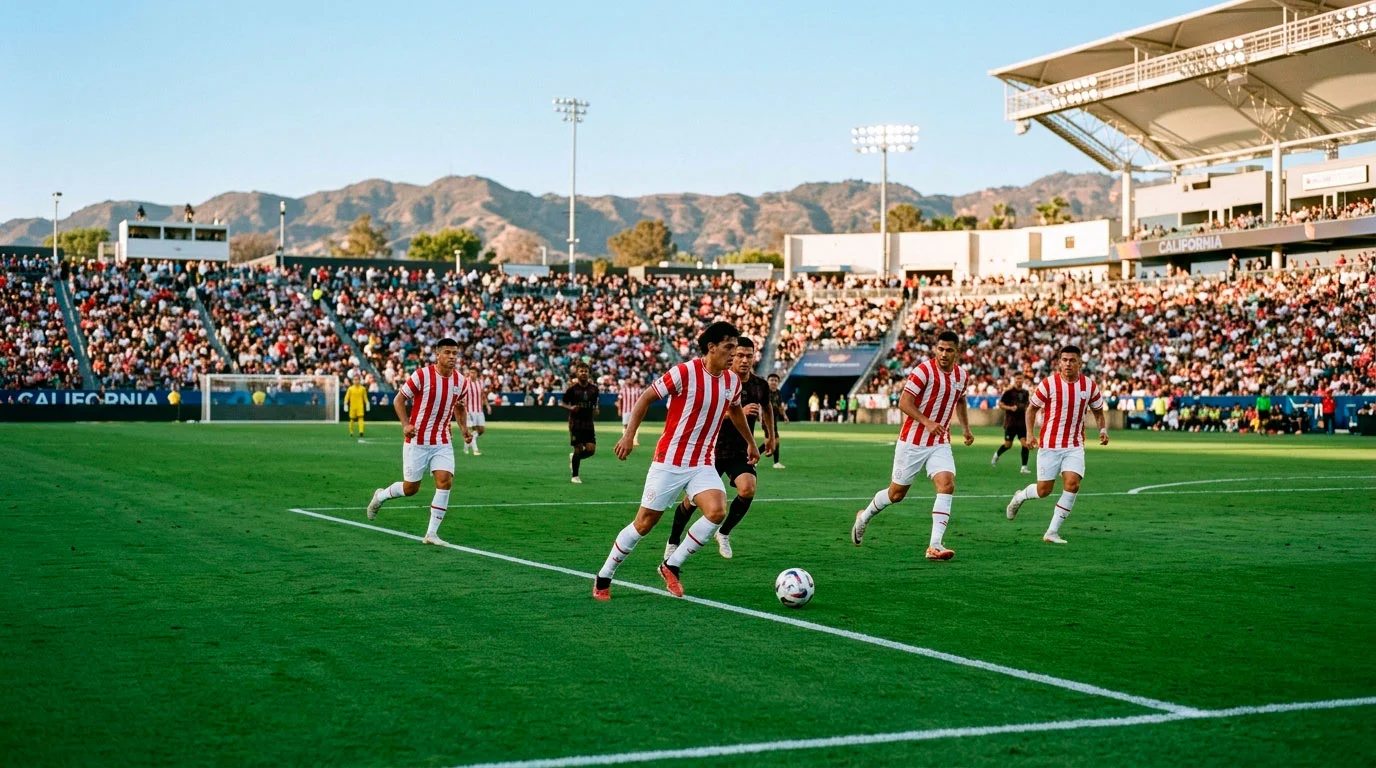
Every group has a team that the pundits dismiss and the punters overlook. In Group D, that team is Paraguay. Ranked approximately 50th in the world, returning to the World Cup after a 16-year absence, and facing two opponents (USA and Australia) who will receive far more media attention — Paraguay are the quintessential “forgotten team” of the group stage. And in my experience, forgotten teams at World Cups are where the value hides.
I have tracked South American teams at World Cups for the better part of a decade, and the pattern is consistent: CONMEBOL sides travel well. They adapt to conditions, they defend with intelligence, and they treat every match as a battle rather than a performance. Paraguay epitomise that identity. Their 2010 World Cup campaign — where they reached the quarter-finals before losing to eventual champions Spain — was built on a 1-0 defensive template that is deeply unfashionable but devastatingly effective in tournament football. The current squad is different in personnel but identical in mentality, and that mentality is what makes the Socceroos’ final group match on 25 June a far trickier proposition than the odds will suggest.
Paraguay’s Return: 16 Years in the Wilderness
The last time Paraguay played at a World Cup, the Socceroos were managed by Pim Verbeek, iPhones were two years old, and nobody had heard of VAR. The 2010 World Cup in South Africa saw Paraguay reach the quarter-finals through a campaign characterised by defensive stubbornness (five goals conceded in five matches) and collective spirit. Since then, the wilderness years have been brutal: failed qualifying campaigns in 2014, 2018, and 2022, coaching instability, and a generational gap that left the squad lacking both youth and experience simultaneously.
The turnaround began with a coaching appointment that prioritised system over stars. Paraguay’s CONMEBOL qualifying campaign for 2026 was a grind — 18 matches, 8 wins, 4 draws, 6 losses, 28 points — good enough for sixth place and the final automatic qualifying spot. They beat Colombia at home, drew with Uruguay in Montevideo, and lost both matches against Argentina (expected) and both against Brazil (also expected). The record against teams ranked below them was near-perfect: six wins from six against Bolivia, Venezuela, and Peru. That selective dominance tells you everything about Paraguay’s identity: they know their level, they compete within it, and they do not waste energy on heroic overperformance against superior opposition.
The xG data from qualifying supports the “solid but unspectacular” assessment. Paraguay’s xG-for averaged 1.31 per game — the sixth-highest in CONMEBOL, matching their final league position almost exactly. Their xG-against of 1.04 per game was respectable and reflected a defensive structure that, while not elite, was significantly improved from the leaky back lines that had characterised their failed qualifying campaigns. The clean sheet rate of 33% (six from eighteen) was modest but represents a team that can shut opponents out when the tactical plan is executed correctly.
For punters, the key qualifying insight is Paraguay’s second-half performance. In matches where Paraguay were level or trailing at half-time, they won or drew 72% of the time. That resilience — the ability to absorb pressure, stay in the game, and nick a goal through a set piece or a moment of individual quality — is the single most relevant trait for World Cup group-stage betting. Paraguay will not blow teams away. But they will make you earn every goal, and they will punish you if you switch off in the 78th minute.
Players to Watch
Paraguay’s squad lacks the household names that fill Argentina’s or Brazil’s roster, but the collective quality is higher than the FIFA ranking suggests. The squad blends experienced CONMEBOL campaigners with younger talents who have earned minutes at respectable European clubs, and the combination produces a group that is greater than the sum of its parts.
The attacking focal point is the centre-forward whose club form in South America or Europe will determine whether Paraguay carry a genuine goal threat or rely entirely on set pieces and transitions. Paraguay’s qualifying campaign saw goals spread across eight different scorers — a distribution that reflects the team’s collective approach but also the absence of a prolific individual marksman. For punters, this spread means “anytime goalscorer” bets on individual Paraguayan players carry higher risk than on teams with a designated 15-goal striker, but the “Paraguay to score” prop in any given match is reliable: they scored in 14 of 18 qualifiers.
The defensive spine is Paraguay’s strength. The centre-back pairing — developed through CONMEBOL qualifying’s physical demands — is combative, aerially dominant, and comfortable defending deep. The goalkeeper, tested in 18 qualifying matches that often required decisive interventions, has the shot-stopping ability to keep Paraguay in matches where they are outplayed on xG. The full-backs are functional rather than attacking, which limits Paraguay’s width but also reduces the transitional exposure that plagues teams with overlapping full-backs.
The midfield trio typically consists of a holding player, a box-to-box runner, and a creative link between midfield and attack. Paraguay’s midfield press is organised but not intense — they prefer to sit in a mid-block (around the centre circle) and invite opponents onto them rather than pressing high. That mid-block approach suppresses the total chance count in matches, which is why Paraguay’s qualifying games averaged just 2.4 total goals — significantly below the CONMEBOL average of 2.8. For over/under markets, that data screams “under” in every Paraguay fixture at the World Cup.
Socceroos vs Paraguay: The Final Group Game
The match that matters most for Australian punters might not be the glamorous opener against Türkiye or the high-profile clash with the USA. It might be the final group game: Paraguay vs Australia, 25 June, Levi’s Stadium in Santa Clara, 12:00 noon AEST on a Thursday. By that point, three matchdays into the tournament, the group permutations will be clear — and the stakes for both teams will be precisely defined.
The most likely scenario: the USA have already qualified (probably with two wins), and Australia and Paraguay are fighting for second place or the best-third-place lifeline. In that scenario, the match becomes a de facto knockout game — winner advances, loser goes home. The intensity will be extreme, the tactical approach conservative, and the probability of a 1-0 or 0-0 scoreline significantly higher than in the earlier rounds.
Paraguay’s playing style — the mid-block, the second-half resilience, the set-piece threat — creates a specific challenge for the Socceroos’ 3-4-3 system. Australia need to control possession (which the 3-4-3 facilitates) and create chances through wingback overlaps and set pieces. Paraguay will absorb that possession, defend deep, and look for counter-attacking moments when Australia overcommit bodies forward. The tactical chess match favours the team with the better set-piece routines — and that, based on qualifying data, is Australia. Nine set-piece goals in qualifying versus four for Paraguay gives the Socceroos a meaningful advantage in dead-ball situations.
The conditions in Santa Clara add another layer. Late June in the San Francisco Bay Area is mild by American standards — temperatures around 22-25 degrees Celsius, low humidity, clear skies. The climate is practically identical to a Melbourne autumn day, which suits the Socceroos far better than the tropical heat of Dallas or Houston would. Levi’s Stadium uses natural grass, which benefits both teams equally and removes the artificial surface variable that could influence the earlier matches in Vancouver and Seattle.
My betting position: under 2.5 goals at approximately 1.75-1.85 is the primary play. Paraguay’s mid-block suppresses goal counts, and a high-stakes final group match between two evenly matched sides will not be an open, free-scoring affair. Australia H2H at 2.30-2.50 is the secondary play, backed by the set-piece advantage and the tactical structure. The draw at 3.20-3.40 is also live — if both teams need a point to qualify, a tacit non-aggression pact is not impossible, though the third-place calculation makes this less likely than in a traditional 32-team World Cup where draws were more strategically useful.
Paraguay Odds and Markets
Paraguay’s outright odds to win the World Cup will sit in the 201.00-301.00 range — extreme longshot territory with no value case. The relevant markets are all at the group level.
Paraguay to qualify from Group D will be priced at approximately 4.50-5.50. My fair price is 5.00, implying a 20% probability. The case for qualification requires Paraguay to beat Türkiye (possible), get a result against either the USA or Australia (difficult but not impossible), and accumulate enough points to finish second or scrape a best-third-place slot. The scenario is plausible but not probable, which is exactly where the odds should sit.
For match markets, the under 2.5 goals line is the consistent Paraguay play across all three group fixtures. Their qualifying average of 2.4 goals per game translates directly to a World Cup context where opponents are stronger but Paraguay’s defensive structure is designed specifically for low-scoring affairs. If you are building a multi that needs short-odds legs, “under 2.5 goals in Paraguay matches” at 1.70-1.85 is a reliable anchor.
Punter’s Quick Verdict
Do not sleep on Paraguay. They are not flashy, they are not exciting on the highlight reel, and they will not generate breathless previews on your favourite football podcast. But they are exactly the type of team that produces the 1-0 upset that turns a comfortable group into a scramble — and that turns a punter’s confident multi into a heartbreaking near-miss. Respect the South American grit. Price the unders. And when the final group match arrives on 25 June, remember that Paraguay have been waiting 16 years for this moment. They will not give it up without a fight that the Socceroos will feel in their bones.
For the full Group D analysis and all 48 teams, head to the complete punter’s team guide.
