

Content
Nine matches. No other stadium at the 2026 World Cup comes close to that workload. AT&T Stadium in Arlington, Texas — the colossal home of the Dallas Cowboys that locals call “Jerry World” after owner Jerry Jones — will see more football than any venue in the tournament, spanning group fixtures through to deep knockout rounds. That volume of matches gives punters something rare in tournament football: a venue-specific data set large enough to identify patterns and exploit them before the business end of the competition arrives. If you are serious about punting the World Cup, you need to understand Dallas.
About AT&T Stadium
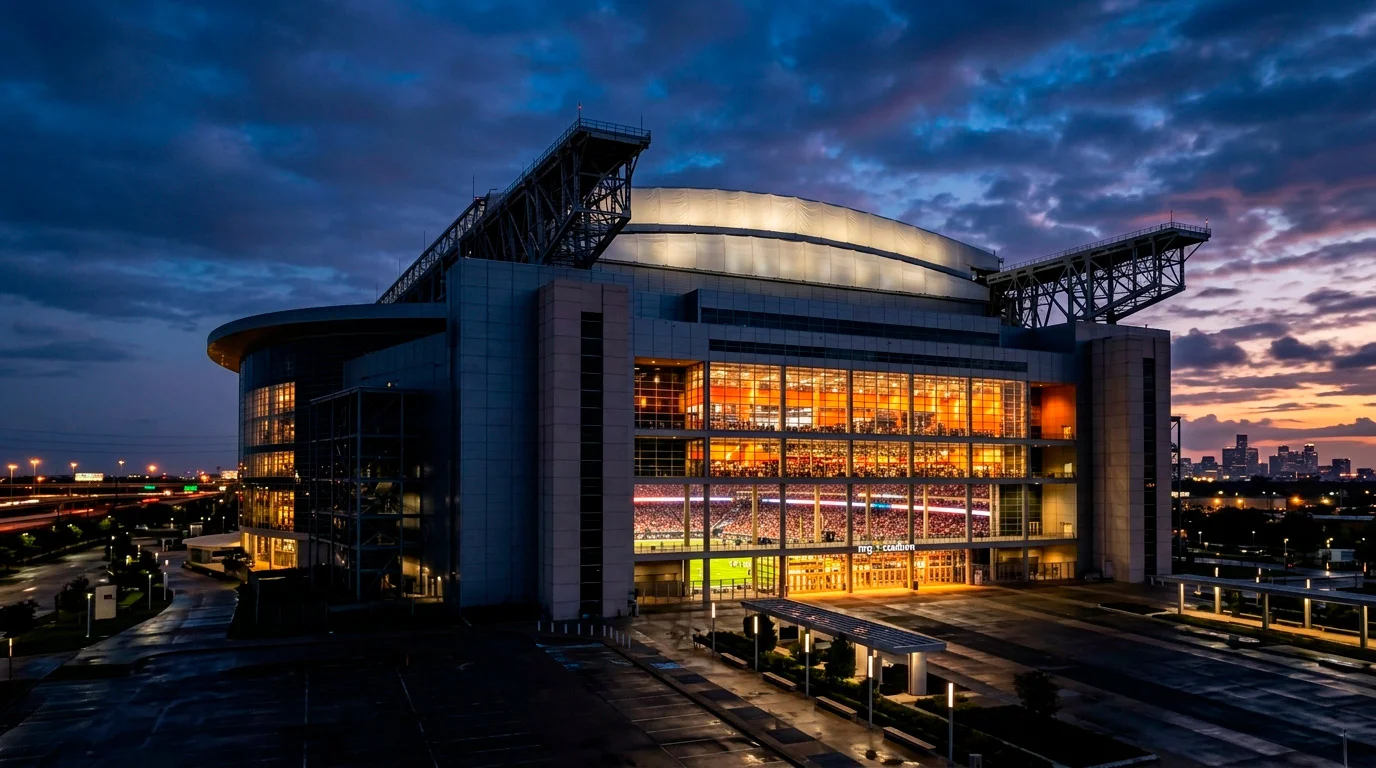
AT&T Stadium opened in 2009 at a cost of US$1.3 billion and immediately became one of the most recognisable sporting venues in the world, thanks to its retractable roof, two massive end-zone doors and a centre-hung video board that stretches 49 metres wide. The capacity for World Cup football configuration is approximately 80,000, though the Cowboys regularly host 100,000-plus crowds for marquee NFL events using standing-room sections. The venue sits in Arlington, a suburb roughly equidistant between Dallas and Fort Worth, with no direct public transport connection — a detail that will frustrate international visitors accustomed to European or Asian stadium accessibility. For Australian fans travelling to Dallas-area matches, a rental car is essentially mandatory.
The retractable roof is the defining feature from a punting perspective. When closed, AT&T Stadium creates a fully air-conditioned indoor environment with stable temperature (around 20-22 degrees Celsius year-round), zero wind and consistent lighting. When open — which is rare during summer — it admits the full force of Texas heat, which in June and July regularly exceeds 35 degrees Celsius with humidity levels that fluctuate unpredictably between dry and oppressive depending on weather patterns. FIFA is expected to keep the roof closed for all World Cup matches, which eliminates the extreme-heat variable but introduces its own dynamic: an enclosed, air-conditioned stadium reduces fatigue and normalises conditions for all teams, removing the environmental edge that hot-weather nations would otherwise enjoy.
The pitch will be temporary natural grass laid over AT&T Stadium’s permanent artificial turf. This is where the venue’s heavy match schedule becomes relevant: nine matches over five weeks means the grass overlay will endure more wear than any other World Cup pitch. By the knockout rounds, expect visible deterioration in high-traffic areas — the centre circle, the edges of the penalty box and the goalmouth. Degraded surfaces historically produce more unpredictable ball movement, more slips, and more goals from set pieces and long balls where the bounce is less controllable. For punters, the progressive pitch deterioration at AT&T Stadium creates a dynamic where over/under markets may shift as the tournament advances — early group matches on fresh grass could produce tighter, lower-scoring affairs, while later knockout matches on worn turf could see more chaos and more goals.
Why Dallas Hosts 9 Matches — The Most of Any Venue
FIFA’s allocation of nine matches to AT&T Stadium reflects several factors: the venue’s enormous capacity generates maximum ticket revenue, the retractable roof guarantees playable conditions regardless of weather, and the Dallas-Fort Worth metropolitan area (the fourth largest in the US, with 8 million residents) provides a massive local fan base. Texas is also home to one of the largest and most diverse immigrant populations in the United States, meaning every group-stage match at AT&T Stadium will attract significant support for both competing nations.
The heavy allocation also serves a logistical purpose. By concentrating matches at a single high-capacity venue, FIFA reduces the operational complexity of managing sixteen simultaneous tournament sites. AT&T Stadium’s NFL-grade infrastructure — broadcast facilities, media centres, medical rooms, mixed zones — exceeds what most purpose-built football stadiums can offer, and the venue’s experience hosting Super Bowls (2011), College Football Playoffs and international friendlies means the operational staff have managed crowd flows at this scale before. For punters, the practical implication is reliability: AT&T Stadium matches are less likely to suffer from pitch problems, logistical disruptions or weather delays than venues with less infrastructure or less experience.
The nine-match schedule spans the tournament’s arc. Early group fixtures allow the venue to bed in — both the pitch and the operational processes — before higher-stakes knockout matches arrive. Punters can use early AT&T Stadium results to calibrate their approach: if the first four group matches produce an average of 2.3 goals, you have a data-driven baseline for the knockout fixtures at the same venue. That kind of venue-specific trend analysis is one of my favourite tournament edges, and AT&T Stadium’s volume makes it the best candidate for this approach across all sixteen venues.
Match Schedule at AT&T Stadium
The full match allocation at AT&T Stadium includes group-stage fixtures from multiple groups plus Round of 32, quarter-final and potentially semi-final matches. The exact schedule depends on FIFA’s final fixture grid, but the venue is confirmed for nine matches spanning the group stage through the knockout rounds. AEST conversions for Dallas matches depend on kick-off times, but Texas operates on Central Daylight Time (UTC-5) during summer, which is 15 hours behind AEST. A typical 3pm local kick-off translates to 6am AEST the following day, and an 8pm local kick-off becomes 11am AEST — both manageable for Australian viewers.
The concentration of nine matches also means AT&T Stadium will host games on consecutive days at several points during the group stage, with the pitch undergoing rapid maintenance between fixtures. The quality of the grass overlay under this schedule will be a talking point throughout the tournament, and I will be tracking pitch condition reports as they emerge — surface quality directly affects betting markets, and any deterioration that accelerates beyond the expected timeline should shift your approach to over/under and set-piece markets at this venue.
The Texas Heat Factor: What Punters Should Know
Even with the roof closed, the Texas heat narrative deserves attention. Teams arriving in the Dallas-Fort Worth area will experience ambient temperatures above 35 degrees Celsius during training sessions, travel to and from the stadium, and rest-day activities. Air conditioning inside AT&T Stadium eliminates match-day heat stress, but the cumulative effect of living and training in extreme heat across multiple days takes a physiological toll that air conditioning cannot fully offset. European squads accustomed to temperate summers — Scandinavian, British, German and Dutch teams — may experience disrupted sleep patterns, increased dehydration during training and general physical discomfort that erodes recovery quality between matches.
For punters, this translates to a subtle but measurable edge for teams from warm climates. South American, African, Middle Eastern and Southern European squads will handle the Dallas environment more comfortably than their Northern European counterparts. If a Scandinavian team faces a CONMEBOL side at AT&T Stadium, the climate-comfort differential is a factor worth pricing into your analysis — not as a decisive variable, but as a tiebreaker when the market odds are tight.
The other heat-related factor is hydration breaks. FIFA mandates cooling breaks when pitch-level temperatures exceed 32 degrees Celsius (or when a specific wet-bulb globe temperature threshold is reached), but with the roof closed at AT&T Stadium, the interior temperature should remain below that threshold. This means matches at AT&T Stadium are likely to be played without cooling breaks — an uninterrupted 45-minute half that advantages fitter teams and penalises sides that rely on stoppages to reorganise tactically.
Betting Angles for AT&T Stadium Games
AT&T Stadium’s controlled environment and high match volume create several specific betting angles that I will be tracking throughout the tournament. The air-conditioned, windless conditions favour technical teams over direct, physical sides — the ball behaves predictably, set pieces are not affected by swirling winds, and the absence of environmental variables reduces randomness. Historically, controlled-environment stadiums produce fewer upsets than open-air venues, because the conditions eliminate the chaos that underdogs rely on to level the playing field.
The progressive pitch deterioration is the variable to watch. If the grass overlay holds up well through the first five or six matches, expect the remaining fixtures to play similarly to the early ones. If the surface degrades noticeably — divots, bare patches, uneven bounce — shift your approach toward over/under overs and set-piece-heavy markets. I will publish analysis on the AT&T Stadium pitch condition as the tournament progresses, but for pre-tournament punting, assume the surface will be good for the group stage and potentially compromised for knockout matches.
One final angle: crowd composition. Dallas’s diverse population means the stadium will have significant support for most competing nations, but the size of Texas’s Mexican-American community (approximately 40% of the DFW metropolitan area identifies as Hispanic) means any match involving Mexico or other Latin American teams at AT&T Stadium will feel like a home game for those sides. Crowd energy is not a myth — studies show that referee decision-making is statistically influenced by crowd noise, with home-crowd-supported teams receiving marginally more favourable calls. If a Latin American side plays at AT&T Stadium, factor in a slight officiating tailwind when assessing card markets and penalty probabilities. For the full venue breakdown across all sixteen World Cup stadiums, head to the complete stadiums and venues guide.
