


Content
Nine years in the betting analysis game, and I still remember my first World Cup punt — France 1998, I backed Brazil at 2.20 to lift the trophy, watched Ronaldo stumble through the final like a man who had seen a ghost, and learned a lesson that has shaped every tournament approach since: the World Cup breaks favourites with ruthless efficiency. That defeat cost me a week’s wages from my part-time job at the local bottlo, but it bought me something far more valuable — respect for the tournament’s chaos.
This World Cup 2026 betting guide for Australian punters is the distillation of two decades watching the beautiful game collide with the mathematics of probability. The 48-team format changes everything. The three-nation hosting arrangement across USA, Mexico and Canada introduces variables we have never seen at this scale. And the Socceroos sit in Group D with the hosts themselves, meaning every Australian punter has skin in the game whether they planned to or not.
I have structured this guide to take you from complete beginner to confident tournament punter. We will cover the new format’s betting implications, navigate Australia’s legal framework for online wagering, break down every market type worth your attention, and build strategies specifically designed for the 39-day marathon that starts on 11 June 2026. The goal is not to turn you into a professional — it is to give you the tools to make smarter punts, protect your bankroll, and actually enjoy the tournament without that sick feeling in your stomach every time you check your balance.
The New 48-Team Format — What It Means for Punters
My mate Davo reckons the expanded format is just FIFA padding their pockets with more broadcast deals. He is not wrong, but he is missing the bigger picture — those extra 16 teams fundamentally alter every betting calculation you have ever made for a World Cup. The last tournament I analysed properly was Qatar 2022 with 32 teams, and the mental models that served me there need serious recalibration.
The new structure features 12 groups of four teams each. That sounds like a minor tweak until you realise it creates 48 group stage matches more than Qatar 2022, spreads the tournament across 39 days instead of 29, and introduces a Round of 32 knockout stage that never existed before. For punters, more matches means more opportunities — but also more variables to track, more potential upsets, and more chances to chase losses if you lack discipline.
Group stage qualification has become genuinely complex. The top two teams from each group advance automatically — that is 24 teams through to the Round of 32. But here is where it gets interesting for value hunters: the eight best third-placed teams also qualify. That third-place pathway creates a safety net for strong teams in difficult groups, which has direct implications for outright odds. A team like the Netherlands, drawn into a competitive Group F with Japan and Sweden, no longer faces elimination risk quite so acutely. Even a stumble against the Samurai Blue could be recoverable with a solid goal difference.
The third-place mathematics deserve your attention if you are serious about group stage betting. In previous World Cups with this format (Euro 2016 and 2020 used it with 24 teams and six groups), a third-placed team typically needed four points and a neutral goal difference to progress. Scale that up to 12 groups, and I expect the qualifying threshold to drop — possibly to three points with a positive goal difference, potentially even lower if several groups produce tight three-way battles. This changes how you approach group winner markets versus qualification markets.
Consider the knockout bracket implications as well. The Round of 32 adds an extra elimination stage before the traditional Round of 16, quarterfinals, semi-finals and final. For outright betting, this means even the strongest teams must win seven matches to lift the trophy — one more than the current six-match requirement. Historically, tournament favourites have stumbled in early knockout rounds when facing motivated underdogs with nothing to lose. Adding another such match increases the probability of upset eliminations.
The 104 total matches create what I call “information asymmetry windows” — periods during the group stage when some teams have already played while others are waiting for their fixtures. Sharp punters can exploit these windows by adjusting their live assessments faster than the market moves. If Argentina destroy Jordan 5-0 in their Group J opener, the market will react to Argentina’s outright odds immediately. But Jordan’s group rivals — Algeria and Austria — might take longer to adjust in certain markets, creating temporary value.
Geographical spread introduces another variable entirely. Matches in Mexico City’s Estadio Azteca sit at 2,200 metres altitude, a factor that historically favours teams acclimatised to thin air. Games in Dallas and Houston will contend with summer heat and humidity. The Socceroos play all three group matches on the US West Coast — Vancouver, Seattle, Santa Clara — in relatively mild Pacific conditions. These venue factors matter for goals markets, first half/second half betting, and any prop involving late-game fatigue.
I have already adjusted my tournament bankroll allocation to reflect the format change. Where I might have reserved 30% for group stage betting in a 32-team World Cup, I am allocating 40% this time — more matches, more edges to find, more opportunities for patient accumulation before the knockouts begin. If you want to understand exactly how the qualification scenarios unfold, I have written a complete breakdown of the 48-team format with probability tables for each qualification pathway.
Betting from Australia: What’s Legal and What’s Not
Last year I had a conversation with a younger punter at the pub who genuinely believed online sports betting was illegal in Australia. He had heard something about crackdowns, saw the BetStop ads, and assumed the government had banned the lot. When I explained that Australians actually lose more money gambling per capita than any other nation on Earth — $31.5 billion in 2022-2023 alone — his jaw nearly hit the floor. The legal framework is more nuanced than the headlines suggest, and understanding it protects you from dodgy operators while keeping your punting legitimate.
The Interactive Gambling Act 2001, amended significantly in 2016, establishes the federal foundation. Online sports betting through licensed Australian operators is completely legal. You can open accounts with Sportsbet, TAB, Bet365 AU, Ladbrokes Australia, and dozens of other licensed bookmakers without any legal risk whatsoever. The Australian Communications and Media Authority oversees federal compliance, while each state and territory maintains its own licensing regime through bodies like the Victorian Gambling and Casino Control Commission or the NSW Independent Liquor and Gaming Authority.
What is explicitly prohibited affects certain betting styles more than the act of betting itself. Online in-play betting — placing wagers while a match is actively being played — cannot be done through websites or mobile apps in Australia. The law permits in-play betting only via telephone. This is not a suggestion or a grey area; it is a hard legal prohibition with real enforcement. Some offshore operators offer in-play betting to Australians anyway, but using them puts you outside the regulatory protection system and potentially in violation of Australian law.
The in-play restriction has direct tactical implications for your World Cup approach. All your pre-match analysis needs to be locked in before kickoff. You cannot watch the first 20 minutes of Australia versus Türkiye, decide the Socceroos look sharp, and jump on them at adjusted odds through your app. Any in-play adjustments require calling your bookmaker’s phone line — a process so cumbersome that most casual punters simply do not bother. I have found this actually improves my discipline; knowing I cannot chase or hedge mid-match forces more rigorous pre-match preparation.
Credit card wagering disappeared in June 2024 under new regulations. You cannot fund your betting account with a credit card, which eliminates one of the most dangerous behaviours in problem gambling — betting with money you do not actually have. Cryptocurrency deposits are similarly banned at licensed Australian operators. Your funding options are now limited to debit cards, bank transfers, POLi, PayID, and similar direct-from-your-own-money methods. Personally, I view this as a positive development; it adds friction that prevents impulsive decisions.
BetStop deserves special attention. Launched in 2023, this national self-exclusion register allows anyone to ban themselves from all licensed Australian wagering operators with a single registration. Once you are on BetStop, every licensed bookmaker must refuse your business for your chosen exclusion period — minimum three months, maximum lifetime. The register works; I know punters who have used it during rough patches and found the enforced break genuinely helpful. If you ever feel your betting is becoming problematic, BetStop exists specifically for that situation.

Advertising restrictions are evolving as we approach the World Cup. From 1 January 2027 — too late for this tournament but worth noting — new rules prohibit betting advertisements during live sports broadcasts between 6:00 AM and 8:30 PM, limit ads to three per hour, ban celebrity and athlete endorsements, and restrict online advertising to logged-in users aged 18 and over. For the 2026 World Cup, we will still see betting advertising during broadcasts, but at reduced levels compared to previous years as operators anticipate the coming restrictions.
The practical advice I give every punter is simple: stick with licensed Australian operators, accept the in-play limitation as a feature rather than a bug, fund your account from money you can genuinely afford to lose, and know that BetStop exists if you ever need it. The legal framework exists to protect you, not to prevent you from enjoying a punt on the Socceroos. If you want a deeper look at responsible practices specifically for the tournament’s 39-day duration, check out the responsible punting guide I put together covering deposit limits, reality checks and time-out features.
World Cup Betting Markets: From Head-to-Head to Exotics
When I started punting seriously, I thought there were about three types of bets — pick the winner, pick the score, maybe guess who scores first. Walking into my first TAB as a wide-eyed teenager, the sheer variety of markets on the board made me feel like I had wandered into an advanced mathematics lecture. Two decades later, I can confidently say that understanding market types is the difference between gambling and investing in outcomes. The World Cup offers every market category you can imagine, and some you probably cannot.
Outright Winner
The outright winner market — also called futures or ante-post — asks one simple question: which team lifts the trophy on 19 July at MetLife Stadium? You place your bet before the tournament starts, and if your team goes all the way, you collect. The simplicity is deceptive because the value calculation is anything but simple.
Outright odds reflect both probability and market sentiment. Argentina currently sits around 4.50 to retain their title, implying roughly a 22% probability. France at 5.00 implies 20%, England at 7.00 implies about 14%. These odds embed the bookmaker’s margin, so actual implied probabilities sum to more than 100% — that overround is how bookmakers make their money. Your job as a punter is finding teams whose true probability exceeds the implied probability from their odds.
The key insight for outright World Cup betting: historical data shows favourites win less often than their odds suggest. Since 1998, only three tournaments have been won by the pre-tournament favourite (Brazil 2002, Spain 2010, France 2018). Germany in 2014 started around fifth in the market. Italy in 2006 was not even in the top five. This does not mean you should avoid favourites entirely — it means the value often lies in the 8.00-15.00 range where a genuine contender might be slightly underrated.
Group Stage Markets
Group stage markets break into several categories. Group winner betting asks which team finishes top of their group — useful when you believe a team will cruise through but might stumble in the knockouts. Group qualification betting asks whether a specific team makes it out of their group, a market with lower odds but higher probability. Exact group finishing order markets offer the longest odds of all, asking you to correctly predict first, second, third and fourth place in sequence.
For the Socceroos in Group D, the group winner market likely has USA as short favourite with home advantage, followed by Türkiye and Australia battling for second, and Paraguay as the outsider. The value question is whether Türkiye’s 24-year absence has left them underrated, or whether Australia’s system under Tony Popovich is being overlooked. These markets typically offer better value than outright markets because bookmakers cannot model group dynamics as precisely as overall tournament outcomes.
Match Markets (H2H, Over/Under, Both Teams to Score)
Match-level betting is where most Australian punters spend their time. Head-to-head (H2H) betting asks you to pick the winner of a specific match, typically with three options: home win, draw, away win. In World Cup group stages, there is no true home team, so the first-listed team is simply designated as “home” for market structure purposes.
Over/under markets set a line for total goals in the match — commonly 2.5, meaning you bet on whether three or more goals are scored (over) or two or fewer (under). The 2.5 line is bookmaker bread-and-butter, but World Cup matches often see adjusted lines based on the teams involved. A Brazil versus Haiti fixture might see a 3.5 or even 4.5 line, while a defensive Uruguay versus Saudi Arabia match might drop to 2.0.
Both Teams to Score (BTTS) is exactly what it sounds like — will each team find the net at least once? This market removes the question of which team wins and focuses purely on offensive production from both sides. BTTS markets suit matchups where you expect an open, attacking game without a clean sheet for either side.
Player Props and Specials
Player proposition markets let you bet on individual performances. Golden Boot (top scorer) is the most popular, but you can also find markets for Golden Ball (best player), Golden Glove (best goalkeeper), and anytime goalscorer for specific matches. Kylian Mbappé might be 7.50 for the Golden Boot, while a less-heralded striker from a team expected to go deep could offer 25.00 or higher.
Specials cover novelty markets that bookmakers offer for entertainment value. Which team will score the first goal of the tournament? Will any match go to penalty shootout in the group stage? (No, that is impossible — group matches end at draws.) What minute will the first red card occur? These markets are harder to handicap with data and often carry higher margins, but they add engagement for social viewing situations.
Understanding which market suits your analysis style matters enormously. I personally find the most consistent returns in over/under totals and BTTS markets, where statistical models based on xG (expected goals) provide an edge against public perception. Match winners require predicting not just quality but psychological factors, referee tendencies, and in-tournament momentum — harder variables to quantify.
Multi-Bet Strategies for the World Cup
There is a particular kind of pain that only Australian punters understand: watching four legs of your five-leg multi salute, then seeing the final leg go down in the 93rd minute to a fluky deflection. I have felt that pain dozens of times, which is exactly why I am so particular about how I construct multis these days. The multi-bet — called an accumulator or parlay in other markets — is embedded in Australian punting culture, and the World Cup provides perfect conditions for strategic multi building.
The mathematics of multi-betting work simply: your odds multiply together. A three-leg multi with selections at 1.80, 1.90 and 2.00 pays 6.84 (1.80 × 1.90 × 2.00). That same $20 stake returns $136.80 if all three legs win, compared to individual bets returning about $34, $38 and $40 respectively across separate wagers. The amplified return is the appeal; the amplified risk is the reality. Each additional leg decreases your probability of success multiplicatively.
My first rule for World Cup multis: cap your legs at four. Every additional leg beyond four drops your expected probability below levels where consistent profit is achievable. The mathematics are brutal — even with selections averaging 70% implied probability (around 1.43 odds), a six-leg multi has only about 12% chance of success. At 60% implied probability per leg, you are looking at under 5% success rate for six legs. The bookmaker edge compounds faster than most punters realise.
Leg selection matters more than total odds. I see punters constantly stacking favourites at 1.20-1.30 to build up their multi price, assuming these “safe” legs are free money. They are not. A 1.20 favourite has roughly an 83% implied probability, meaning one in six of these “certainties” will fail. String together five such legs and your actual success probability drops to about 40% — for a multi paying just 2.49. The return does not justify the risk.
Instead, I construct multis around value selections in the 1.70-2.20 range. These are matches where I have done genuine analysis and believe the true probability exceeds the implied probability by a meaningful margin. A three-leg multi with average odds of 1.90 pays 6.86, nearly triple the five-leg favourite stacker, with substantially better probability of landing if each leg is genuinely value.
World Cup group stages offer excellent multi opportunities because match contexts are clear. First-round matches feature fresh teams with known systems, minimal tournament fatigue, and high motivation. By the third round of group play, some matches become meaningless for already-qualified or already-eliminated teams — avoid these legs like the plague. The dead rubber is where multis go to die.
Consider thematic multis that exploit tournament dynamics. Early in a World Cup, underdogs frequently overperform as favourites deal with pressure and underdogs play with freedom. An opening weekend multi backing 2-3 mid-tier teams against slight favourites can offer explosive odds if the trend holds. Alternatively, build a multi around expected high-scoring games, combining over 2.5 goals selections from matches featuring attacking teams with leaky defences.
Bankroll management for multis requires strict discipline. I never allocate more than 10% of my tournament bankroll to multi betting, and individual multi stakes stay between $10-30 regardless of how confident I feel. The variance in multi betting is extreme — you can go weeks without a winner, then hit three in two days. Flat staking prevents the emotional spiral of increasing stakes after losses or riding hot streaks until they crash.
Reading Decimal Odds: A Quick Refresher for Aussie Punters
I spent half an hour last week explaining decimal odds to my sister who wanted to put a punt on the Socceroos for the first time. She kept confusing the decimal number with a multiplier, then with the profit, then asking why anyone would bet on something that returns less than double your stake. By the end, she got it — but the conversation reminded me that odds formats trip up more new punters than any other concept.
Decimal odds tell you the total return per dollar staked, including your original stake. If the Socceroos are at 3.50 to beat Türkiye, a $10 bet returns $35 total if they win — that is your $10 stake back plus $25 profit. The formula is simple: stake multiplied by decimal odds equals total return. Subtract your stake and you have your profit.
The Australian market standardised on decimal odds decades ago, distinguishing us from the UK (fractional odds like 5/2) and the US (moneyline odds like +250). Our system is mathematically cleaner and makes multi calculations trivial — just multiply the decimal odds together. When you see a selection at 2.00, you know immediately that you are getting even money: double your stake if you win.
Converting decimal odds to implied probability helps evaluate value. The formula is: 100 divided by the decimal odds equals the implied percentage probability. Odds of 4.00 imply 25% probability (100 ÷ 4 = 25). Odds of 1.50 imply 66.67% probability. Odds of 2.50 imply 40% probability. When you believe a team’s actual probability exceeds the implied probability, you have found potential value.
Bookmaker margins hide in the gap between true probability and implied probability. If a match has two equally likely outcomes (50% each), true odds would be 2.00 on both sides. Instead, you might see both teams at 1.91, implying 52.4% each — a total of 104.8%. That extra 4.8% is the bookmaker’s margin, ensuring they profit regardless of outcome. World Cup matches typically carry 4-6% margins on major markets, rising to 10% or higher on exotic props.
For practical punting, I always calculate implied probability before placing a bet. If I assess the Socceroos at roughly 35% to beat USA, I need odds above 2.86 (100 ÷ 35 = 2.86) to find value. If the market offers 3.50, I am getting excellent value and should consider a stake. If the market offers 2.50, the value lies elsewhere, regardless of how much I want to back the green and gold.
How to Spot Value in World Cup Markets
The first time I properly understood value betting, I was sitting in a university statistics lecture with absolutely no intention of listening to the actual content. Instead, I was running probability calculations for the 2006 World Cup on my TI-83 calculator, and something clicked: if I could estimate true probabilities better than the market implied, I could find systematic edges. That realisation transformed my punting from lottery-ticket gambling into something resembling analysis.
Value exists when the odds offered exceed the true probability of an outcome. This sounds simple but requires genuine analytical work. The market is not stupid — thousands of sharp bettors and professional syndicates are constantly correcting mispricing. Yet World Cup betting creates unique value windows because casual money floods into popular teams, national bias distorts local markets, and the four-year gap between tournaments means bookmakers have limited recent data for some matchups.
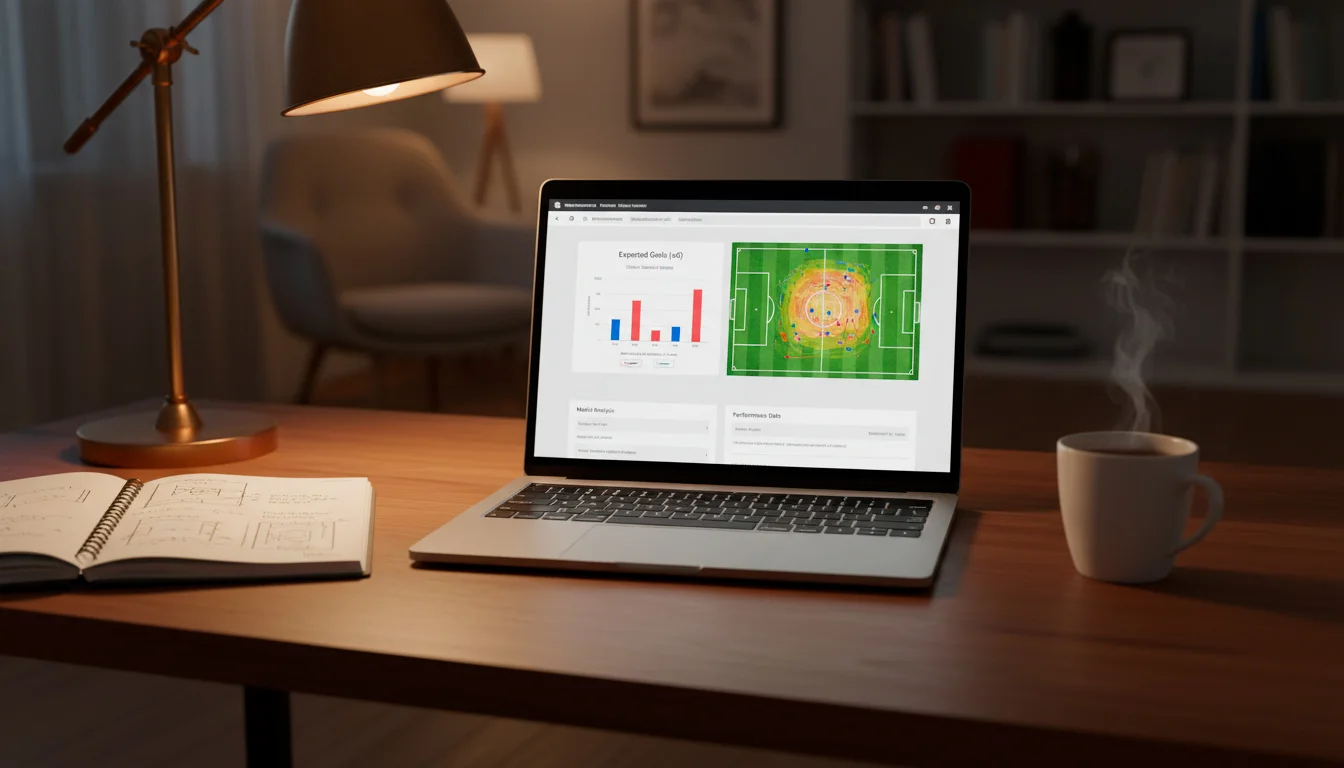
Expected goals (xG) provides the foundation for my value hunting. Every shot in a football match can be assigned a probability based on location, angle, body position, defensive pressure, and game state. Sum these probabilities and you get expected goals — a measure of what the scoreline “should” have been given the chances created. Teams that consistently overperform xG (scoring more than expected) or underperform (scoring less) are likely to regress toward their true underlying quality.
The Socceroos present an interesting case study. In their AFC qualification campaign, Australia overperformed xG by approximately 10 units across their matches — a statistically significant gap suggesting clinical finishing or goalkeeper excellence beyond sustainable levels. For a value punter, this raises a flag: are the Socceroos genuinely that efficient in front of goal, or were they riding variance that will correct at the World Cup?
I investigate by looking at underlying process metrics. How many big chances did they create versus convert? What was the quality of chances conceded versus actual goals allowed? Is the overperformance spread across many matches or concentrated in two or three outlier games? If Australia created high-quality chances consistently and converted at elevated but not absurd rates, the efficiency might be sustainable. If they were scraping 1-0 wins from limited xG totals, regression is coming.
Tournament history provides another value lens. Certain patterns recur across World Cups: first-time participants tend to underperform expectations as the occasion overwhelms them, while established tournament teams handle pressure better. Hosts historically overperform their ranking due to home support and acclimatisation advantages. Teams travelling long distances to different climate zones often struggle in early matches. These patterns create systematic edges when the market underweights them.
I also watch for value in less popular markets. The outright winner market is heavily scrutinised, making mispricing rare. Group winner markets see less sharp action and potentially more value. Player props and specials attract recreational money and sometimes offer genuine edges for those willing to do the research. The Golden Boot market, for instance, often overvalues strikers from smaller nations who are unlikely to reach the latter stages, where the most matches — and most goals — occur.
My process involves estimating true probabilities using data, comparing those estimates to market odds, and betting only when the edge exceeds the bookmaker margin plus a buffer for uncertainty. If I estimate Australia at 30% to beat Türkiye and the market offers 2.90 (34.5% implied), the 4.5 percentage point gap barely covers the margin. If the market offers 3.80 (26.3% implied), the 3.7 percentage point gap in my favour represents genuine value.
Discipline matters more than brilliance. You will find value in perhaps 15-20% of matches you analyse, which means walking away from 80% of potential bets. The punters who lose long-term are those who force action when value is absent. Patient capital allocation to genuine value opportunities is the entire game.
Bankroll Basics: Punting Smart Over 39 Days
The World Cup is a marathon masquerading as a sprint. First-time tournament punters see 104 matches across 39 days and think “opportunity everywhere” — then proceed to empty their accounts before the knockouts even begin. I have watched it happen to smart people who simply underestimated how relentless the schedule becomes and how quickly variance can swing against you.
Start by setting a total tournament bankroll: the amount you are prepared to lose entirely without it affecting your life. For most recreational punters, this ranges from $200 to $1,000. Be honest with yourself — if losing $500 means you cannot pay rent, your bankroll is not $500. Once you set this number, write it down. It does not increase during the tournament regardless of results.
Divide your bankroll into units, typically 50-100 units. A $500 bankroll becomes 50 units of $10 or 100 units of $5. Single match bets should range from 1-3 units depending on confidence level. Multi bets should be 0.5-1 unit. This structure ensures you can survive the inevitable losing streaks without busting. If you lose your first ten bets at 1 unit each, you have still got 90% of your bankroll remaining.
The group stage represents the highest volume period — approximately 48 matches in the first 18 days. Allocate 40-50% of your bankroll for this phase. The knockout stages feature fewer matches but higher stakes and potentially larger edges as team form becomes clearer. Reserve the remaining 50-60% for knockouts, increasing your unit size slightly as your bankroll grows (if successful) while maintaining the same percentage risk.
Never chase losses by increasing stakes. If you have a bad day, the temptation to double up on tomorrow’s matches is overwhelming. Resist it. The mathematics do not care about your desire to recover quickly. A doubled stake after a loss means a doubled loss if the streak continues. Flat staking — betting the same unit size regardless of recent results — is psychologically harder but mathematically optimal.
Take breaks. Seriously. After five consecutive losing bets, step away from the markets for 24 hours. After a big win, do the same. Emotional states corrupt decision-making in predictable ways: losses create desperation and recklessness, wins create overconfidence and position sizing errors. The matches will still be there tomorrow. Your capital might not be if you punt angry or drunk.
Track everything. I use a simple spreadsheet: date, match, market, selection, odds, stake, result, profit/loss, cumulative balance. Reviewing this log reveals patterns you cannot see in the moment — maybe you consistently lose on early morning matches (fatigue affects your analysis) or consistently win on over/under markets (you should focus there). Data-driven self-improvement requires data.
Finally, set withdrawal triggers. If your bankroll doubles at any point, withdraw half and bank the profit. You are now playing with house money, and the worst case scenario is breaking even rather than losing. This simple rule locks in gains and prevents the common fate of profitable tournament punters: riding a hot streak all the way back down to zero.
Your World Cup Punt Starts Here
Look, I could fill another ten thousand words with betting theory, statistical frameworks, and historical analysis — but at some point you have to stop reading and start doing. The 2026 World Cup represents the most significant betting opportunity in four years, amplified by the expanded format and the Socceroos’ presence in a genuinely competitive group.
The fundamentals I have outlined here are not revolutionary. Understand the format. Operate within the legal framework. Know your markets. Build multis with discipline. Hunt value systematically. Protect your bankroll ruthlessly. These principles apply to every betting context, but the World Cup compresses them into an intense 39-day window where both opportunities and risks multiply.
My personal approach for 2026 starts conservative. I will watch the opening weekend closely, noting which teams look sharp and which look nervous. I will resist the urge to bet heavily on Matchday 1 when information is thinnest. By Matchday 2, patterns emerge. By Matchday 3, group positions clarify and knockout scenarios crystallise. That is when my stakes increase — when the data supports confidence.
The Socceroos play Türkiye on 13 June at 2:00 PM AEST — a Saturday afternoon slot that most Australian punters will actually be able to watch. That match, more than any other in the tournament, will determine how I allocate the rest of my World Cup bankroll. A Socceroos win opens up genuine Round of 32 possibilities. A loss puts pressure on every subsequent match. Either result shapes the betting landscape for Australian punters in ways the statistics cannot fully capture.
Start building your watchlist now. Identify the teams you want to follow closely, the markets you understand best, and the bankroll you can genuinely afford to risk. When the tournament kicks off on 11 June with Mexico versus South Africa at Estadio Azteca, you will be ready — not just to punt, but to punt smart.
