

Content
On 19 July 2026, the biggest match in football will be played inside a stadium that was built for American football and has never hosted a FIFA World Cup match before. MetLife Stadium in East Rutherford, New Jersey — technically not in New York City, though you can see the Manhattan skyline from the upper deck — becomes the centre of the sporting world for ninety minutes (or more, if penalties have anything to say about it). For Aussie punters tracking the tournament from start to finish, understanding this venue matters: the pitch, the climate, the crowd dynamics and the scheduling all feed into how the final plays out on the betting markets.
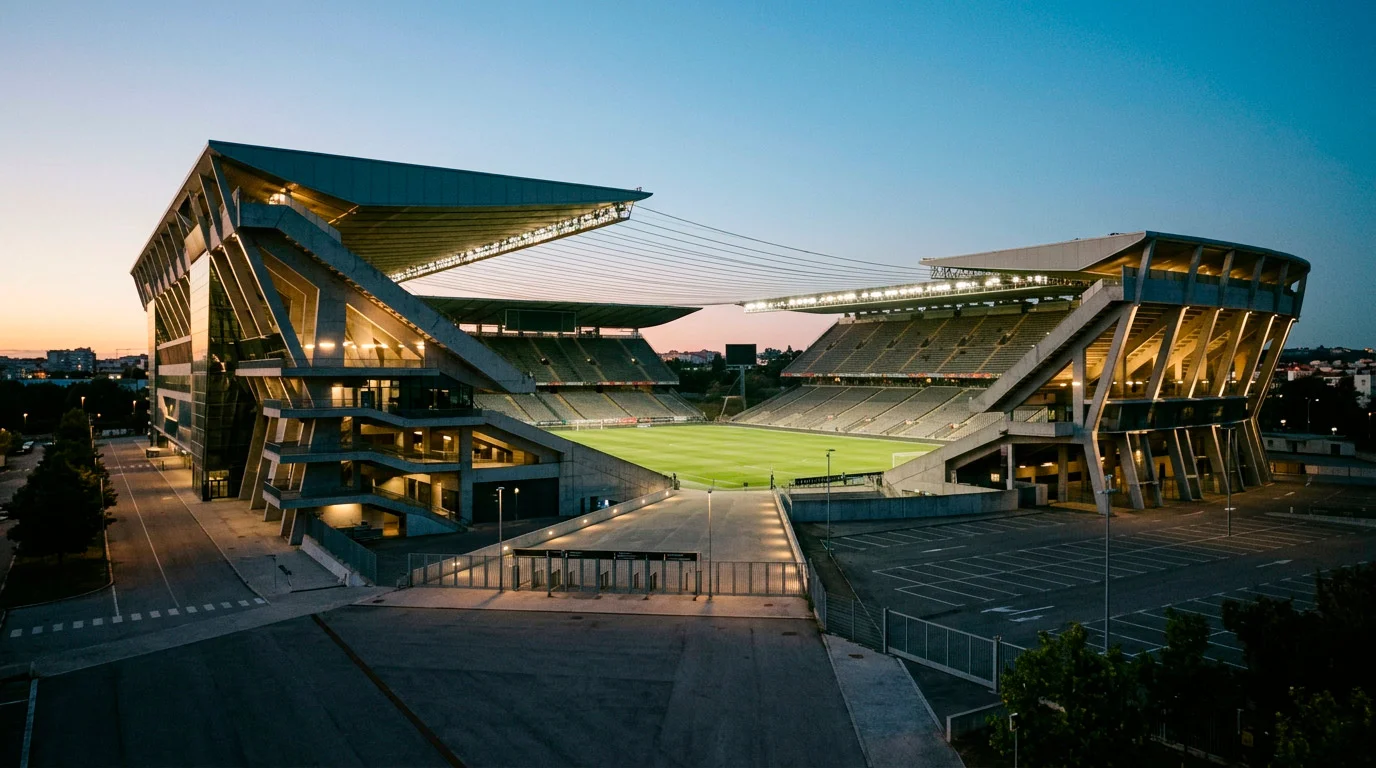
About MetLife Stadium
MetLife opened in 2010 as a replacement for the old Giants Stadium, which sat on the same patch of New Jersey Meadowlands since 1976. The venue cost US$1.6 billion to build — making it the most expensive stadium in the world at the time — and serves as the shared home of the New York Giants and New York Jets in the NFL. The capacity for football (soccer) configuration will be approximately 82,500, making it one of the larger World Cup final venues in history and second only to the 1994 final at the Rose Bowl (94,194 attendance).
The stadium is an open-air bowl with no retractable roof, which matters enormously for mid-July conditions in the New York metropolitan area. Unlike some US venues that offer climate-controlled environments, MetLife exposes players to whatever the east-coast summer delivers — and in late July, that typically means temperatures between 28 and 35 degrees Celsius with humidity levels that can exceed 70%. For punters, this is not a trivial detail. High heat and humidity directly affect player performance in the final third of matches: sprinting speeds drop by an average of 6-8% in temperatures above 30 degrees, and the frequency of goals scored after the 75th minute increases in hot conditions as fatigued defenders make mistakes. The over/under and late-goal markets for MetLife matches will be shaped by these environmental factors.
The pitch itself will be temporary natural grass installed over MetLife’s permanent artificial turf — a process FIFA mandated for all World Cup venues. This overlay system, which involves laying sod on a modular tray system above the synthetic surface, has been used at previous tournaments and generally produces a reliable playing surface. However, by the time the final arrives on 19 July, the pitch will have hosted multiple matches over the preceding weeks, and wear patterns — particularly in the centre circle and penalty areas — could affect ball movement and footing. Late-tournament pitch degradation historically favours teams with strong aerial games and direct styles over sides that rely on intricate passing combinations on the deck.
World Cup 2026 Matches at MetLife
MetLife is not just the final venue — it hosts multiple matches across the tournament, starting with group-stage fixtures and progressing through the knockout rounds. The exact allocation includes group matches, a Round of 32 fixture, a quarter-final, a semi-final and the final itself, making it the second-most-used venue in the tournament behind AT&T Stadium in Dallas. For punters tracking venue-specific trends, MetLife’s results across the group stage and early knockouts will provide useful data on how the pitch and conditions influence scorelines before the final arrives. I will be monitoring the average goals per game at MetLife through the group stage — if overs hit consistently in the New Jersey heat, that trend is likely to carry through to the knockout rounds. Venue-specific data is one of the most underutilised edges in tournament betting, and MetLife’s heavy match load gives us a sample large enough to draw meaningful conclusions before the big matches arrive.
The AEST conversion for the final depends on the exact kick-off time, which FIFA typically sets at a prime-time local slot. If the final kicks off at 4pm ET (the most likely scenario based on FIFA’s broadcast scheduling patterns), that translates to 6am AEST on Monday 20 July — an early alarm for a Sunday-night event in New York, but perfectly timed for an Australian audience waking up on a winter Monday. If you are planning a pub session, some venues in Sydney and Melbourne have historically opened early for World Cup finals, and the 2026 edition should be no different given Australia’s direct involvement in the tournament.
The Final on 19 July: What to Expect
World Cup finals follow a pattern that punters can exploit. Across the last eight finals (1990-2022), five have produced two goals or fewer in regular time, and three have gone to extra time or penalties. The average total goals in the final including extra time is 2.75, but if you strip out the outlier (France 4-2 Croatia in 2018), the average drops to 2.17. Finals are cautious affairs where defensive structure trumps attacking ambition — both teams have too much to lose, and the psychological weight of the occasion suppresses risk-taking in the opening 60 minutes.
For the 2026 final specifically, the market will not settle until the semi-final matchups are confirmed, but structural factors can be assessed now. The July heat at MetLife will favour teams with deep squads capable of rotating through the knockout rounds — sides that have relied on the same eleven players for seven matches will be physically compromised by the final. Historically, European teams with large Premier League and La Liga squads manage tournament fatigue better than South American sides, though Argentina’s 2022 triumph challenged that narrative. The under 2.5 goals line in the final is typically priced around 1.85, and based on historical trends and the heat factor, I expect the 2026 final under to offer value at anything above 1.80.
The cards market is another angle worth monitoring. World Cup finals average 4.8 yellow cards — higher than the tournament average — driven by the emotional intensity and cautious fouling in midfield. If you are building a multi that includes the final, adding a “four or more cards” leg at around 1.50 is a reliable inclusion that adds odds without excessive risk.
East Rutherford and New York: The City Around the Stadium
MetLife sits in the Meadowlands Sports Complex in East Rutherford, a New Jersey suburb roughly 13 kilometres west of Midtown Manhattan. The stadium is accessible by NJ Transit trains and buses, but the surrounding area is decidedly suburban — there is no walkable entertainment district comparable to Wembley or the Stade de France’s precinct. For the World Cup, FIFA and local organisers will create a fan zone experience around the venue, but the real atmosphere for Australian fans travelling to the final will be in Manhattan, where the bars, restaurants and fan activations will turn Midtown and Lower Manhattan into a football carnival.
The New York metropolitan area’s sheer population density — 20 million people within commuting distance — guarantees a full stadium and a diverse crowd. Unlike finals in smaller cities where the ticket allocation skews heavily toward the two competing nations, MetLife’s capacity and New York’s cosmopolitan demographics mean the crowd will include significant neutral support from the dozens of nations whose diaspora communities call the region home. This has an interesting effect on atmosphere: neutral crowds tend to favour attacking football and react more loudly to goals, which can psychologically push teams to be more expansive than they might otherwise be in a final. That crowd dynamic, combined with the heat, makes the final a less predictable environment than a typical European final venue.
What Aussie Punters Should Factor In
If the Socceroos somehow make it to MetLife for the final — a scenario that bookmakers price at approximately 501.00, which I include purely for the dream — the 6am Monday AEST kick-off would produce the biggest television audience in Australian sporting history. But even without the Socceroos, the final is the tournament’s premier betting event, and understanding the venue gives you an edge. The key factors to carry into your final-day punting are the open-air heat and humidity pushing the over in late-goal markets, the temporary natural grass surface favouring direct play over tiki-taka passing, the historical trend toward low-scoring finals in regular time, and the elevated cards market driven by tournament pressure. MetLife Stadium is where the 2026 World Cup story ends. For how the Socceroos and every other contender navigate the path to get there, start with the complete stadiums and venues guide covering all sixteen World Cup grounds.
