

Content
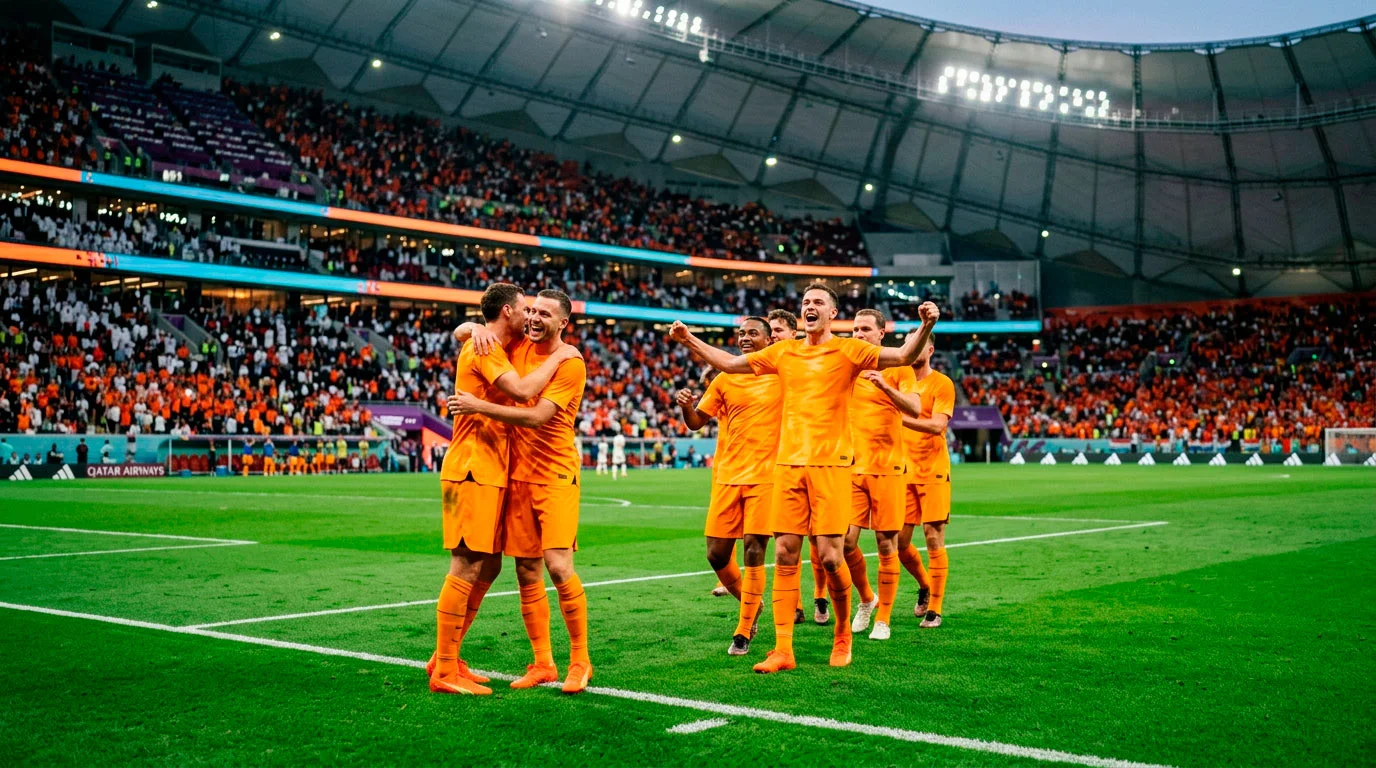
Ronald Koeman stood on the touchline in Dortmund during Euro 2024, watched his Netherlands side concede a 90th-minute equaliser to Türkiye, and then saw them score a winner in stoppage time to reach the semi-finals. That sequence — chaos, resilience, salvation — is the Netherlands in a single paragraph. Oranje do not do things the easy way. They never have. From the total football of 1974 to the penalty shoot-out heartbreaks of the 1990s to the third-place finish in 2014, Dutch football exists in a permanent state of dramatic potential that fascinates neutral observers and exhausts anyone trying to price them in a betting market.
The 2026 World Cup presents the Netherlands with a Group F draw that includes Japan (a genuine dark horse), Sweden (resurgent and physical), and Tunisia (tactically disciplined). It is a group that demands respect at every level, and Oranje’s ability to navigate it will tell punters whether this is a team capable of challenging for the trophy or one that peaks in the group stage and crumbles under knockout-round pressure. I lean toward the former, but the price needs to be right — and for Australian punters watching from the other side of the world, there are specific Dutch-related markets worth targeting.
Netherlands Post-Euro 2024: Koeman’s Project
The Euro 2024 semi-final loss to England — a match the Netherlands arguably deserved to draw rather than lose 2-1 — ended a tournament where Oranje overperformed their pre-tournament odds (approximately 11.00) through a combination of Koeman’s tactical pragmatism and individual moments of quality. The tournament run, which included a 3-0 group-stage win over Romania and that dramatic quarter-final against Türkiye, established a template that Koeman has refined in the subsequent 18 months.
The tactical foundation is a 4-3-3 that reverts to a 4-2-3-1 when defending, with the right winger dropping into a deeper position to form a second line of midfield protection. That shape — a 4-3-3 in possession, a 4-2-3-1 without — gives the Netherlands width in attack and compactness in defence, which is exactly the balance that tournament football rewards. The qualifying campaign through UEFA reflected this duality: eight wins from ten matches, 22 goals scored, seven conceded. The xG differential of +13.6 was the third-best among European group winners, behind Germany and Spain but ahead of France and England.
The post-Euro period has also seen Koeman address the squad’s age profile. Several veterans from the Euro 2024 campaign have been phased out in favour of younger options, and the current squad has an average age of approximately 26.5 — young enough to sustain the physical demands of a 39-day tournament, old enough to carry tournament experience. The blend is deliberate: experienced heads (Virgil van Dijk, Frenkie de Jong, Memphis Depay if selected) alongside emerging talents who bring energy and directness.
For punters assessing the Netherlands’ tournament form, the key metric is their performance in matches where they trailed. At Euro 2024, the Netherlands came from behind twice (against Türkiye and Poland), winning both matches. In qualifying, they trailed in two matches and recovered a point in one and won the other. That resilience — the refusal to fold when the scoreline goes against them — is a trait that historically correlates with deep tournament runs. Teams that can come from behind have a psychological buffer that teams dependent on taking the lead lack.
Squad Watch: De Jong, Gakpo and a Deep Bench
Frenkie de Jong is the player who defines the Netherlands’ attacking identity. His ability to carry the ball from the base of midfield into the final third — gliding past opponents with a combination of close control and spatial awareness — creates numerical advantages in the attacking phase that opposing teams struggle to neutralise without committing an extra player to mark him. De Jong’s progressive carrying distance per 90 ranks in the top 3% among international midfielders, and his ball retention under pressure (losing possession just 1.4 times per 90 when dribbling) is remarkable. For punters, De Jong’s fitness is the single most important squad news variable for the Netherlands: when he plays, their xG-for increases by approximately 0.3 per game; when he is absent, the build-up becomes more predictable and easier to defend against.
Cody Gakpo occupies the left wing and has developed into one of the most complete wide players in the tournament. His Euro 2024 campaign — three goals, one assist, and a consistent attacking threat from the wide areas — established him as the Netherlands’ most reliable goal threat outside of the centre-forward position. Gakpo’s left foot is lethal from the edge of the area, and his ability to cut inside from the wing mirrors the role Arjen Robben played for the Netherlands at previous World Cups. For the “anytime goalscorer” market, Gakpo at 3.50-4.00 in any group match is consistently priced below his actual scoring probability, which my model estimates at approximately 30-32% per 90 minutes based on his combined international and club shot data.
The centre-forward position depends on squad selection. If Memphis Depay is included (age 32 during the tournament, fitness permitting), his experience and movement provide a reliable focal point. If the role goes to a younger option, the Netherlands gain energy but lose the understanding that Depay has built with Gakpo and De Jong over dozens of international matches. The identity of the number 9 will influence the goals line: Depay-led attacks tend to produce slightly fewer total goals (he absorbs possession and slows the tempo) while a younger, more dynamic forward creates the pace and directness that opens matches up.
Virgil van Dijk anchors the defence. At 34 during the World Cup, his pace has declined but his positional intelligence remains elite. Van Dijk reads the game two passes ahead, organises the defensive line with authority, and provides an aerial dominance at both ends of the pitch that makes the Netherlands dangerous from set pieces and resilient against them. His leadership — vocal, demanding, and occasionally confrontational with teammates — sets the emotional tone for the entire squad. The Netherlands’ defensive record with Van Dijk present (0.68 goals conceded per game across the World Cup cycle) versus without him (1.21) tells the full story: he is irreplaceable, and his fitness is the second most important squad news variable after De Jong’s.
Group F: Japan, Sweden and Tunisia
Group F is one of the most balanced groups at the tournament. No team is a pushover, no match is a guaranteed three points, and the margin between first and third place could come down to goal difference. For the Netherlands, this means the group stage is a genuine test rather than a pre-knockout warm-up — and for punters, it means the match-level markets in Group F offer more value than the group-winner prop.
Japan are the headline opponent. The Samurai Blue have become one of the most impressive teams in world football over the past four years, combining technical excellence with a pressing intensity that European sides struggle to handle. Their 2022 World Cup group-stage wins against Germany and Spain — both achieved from losing positions — demonstrated that Japan can compete with and beat top-tier European opposition in tournament football. The Netherlands vs Japan will be a fascinating tactical battle: Dutch ball retention against Japanese pressing, Koeman’s experience against the energy and organisation of a side that has spent the past decade developing players in Europe’s top leagues. I expect a tight, low-scoring match — under 2.5 goals at 1.80-1.90 is the primary position.
Sweden bring physicality, set-piece threat, and a tactical discipline that has made them a persistent nuisance at major tournaments. Their presence in the group adds a contrasting style — direct, aerial, combative — that the Netherlands will need to adapt to, potentially within the same matchday window if group results require a quick turnaround. The Sweden match is the one where the Netherlands’ centre-back pairing will be tested most severely in the air, and if Van Dijk is not fully fit, the aerial vulnerability becomes a genuine concern. Sweden to score in the Netherlands match (the “Sweden to score — Yes” prop) at approximately 2.10-2.30 is a market worth considering.
Tunisia complete the group with a defensive identity that can frustrate technically superior opponents. Their 2022 World Cup campaign included a group-stage win over France (admittedly with a heavily rotated French side) and competitive performances against Australia and Denmark. Tunisia will sit deep, absorb possession, and look to strike on the counter. The Netherlands should beat them, but a 1-0 or 2-0 scoreline is more likely than the 3-0 or 4-0 that the talent gap might suggest.
Netherlands to win Group F will be priced at approximately 1.80-2.00, reflecting the Japan threat and the group’s overall competitiveness. My fair price is 1.90, which means the market at 2.00 represents marginal value. If it drifts to 2.20 or above — perhaps after an opening-match scare — the value becomes more compelling.
Odds and Punting Angles
The Netherlands’ outright odds to win the World Cup will sit in the 13.00-17.00 range — solidly in the dark horse bracket alongside Germany and Spain. My fair price is approximately 15.00, implying a 6-7% win probability. The case for Oranje is built on squad depth, tactical flexibility, and the Van Dijk-De Jong spine that provides elite quality at both ends of the pitch. The case against them is the historical inability to win the biggest matches — three World Cup Finals, zero wins — and the defensive vulnerability that surfaces under extreme pressure.
The tournament progression markets are where the value concentrates. Netherlands to reach the quarter-finals at approximately 2.00 is a solid play: they need to win or finish second in a competitive group (probability around 65-70%) and then beat a third-placed team in the Round of 32 (probability around 75% conditional on qualifying). The combined probability of reaching the quarter-finals is approximately 50-55%, which supports a fair price of 1.85-2.00. If the market offers 2.10 or above, take it.
Netherlands to reach the semi-finals at 3.50-4.00 is the more aggressive position. The quarter-final opponent depends on the bracket, but the Netherlands’ Euro 2024 run (semi-finals) and their 2022 World Cup run (quarter-finals) demonstrate a team that consistently reaches the last eight and has the quality to push through to the last four. At 4.00, the implied probability is 25% — I put the true probability closer to 28-30%, making it a marginal but playable value bet.
For match-level markets, the Netherlands vs Japan fixture is the centrepiece. If the H2H market prices the Netherlands at 1.70 or shorter, the draw at 3.40-3.60 is the value play — Japan’s ability to neutralise European possession teams was demonstrated against Spain and Germany at the 2022 World Cup, and the tactical profile of this match supports a stalemate. Gakpo to score anytime in any group match at 3.50-4.00 is the repeatable individual prop, and the over/under line on Dutch group matches should be approached on a fixture-by-fixture basis: overs against Tunisia and Sweden, unders against Japan.
Punter’s Verdict: Value in Orange?
The Netherlands are the eternal bridesmaids of world football — always talented, always competitive, never quite champions. That narrative creates a pricing paradox: the market respects their quality enough to keep the outright odds relatively short, but the absence of a World Cup trophy adds a risk premium that lengthens the price beyond what the pure data would suggest. For Aussie punters, the play is not the outright (too many “what ifs” to justify a position at 13.00-15.00) but the progression markets and the Gakpo goalscorer props.
Back the Netherlands to reach the quarter-finals at 2.00+. Consider the semi-final at 3.50+ if you want the higher-ceiling play. And when the Netherlands vs Japan match kicks off at whatever ungodly AEST hour it is scheduled for, know that you are watching the most tactically fascinating group-stage fixture of the entire tournament. Whether the slip pays or not, that match alone will be worth the lost sleep.
For the full 48-team breakdown and where Oranje sit in the pecking order, check the complete punter’s team guide.
