

Content
No stadium in world football carries more World Cup history than the Estadio Azteca. Two finals. Two of the greatest goals ever scored — Maradona’s against England in 1986 and Carlos Alberto’s against Italy in 1970. And now, on 11 June 2026, the Azteca adds another chapter as the venue for the tournament’s opening match: Mexico versus South Africa. For a stadium that has witnessed football at its absolute peak, hosting the curtain-raiser of the first 48-team World Cup feels like destiny rather than coincidence. For Aussie punters setting their clocks and placing their opening-day bets, understanding the Azteca — particularly its altitude — is not optional. It is the single most important venue-specific factor in the entire tournament.
About Estadio Azteca: Three World Cups and Counting
The Azteca opened in 1966 and has since become the only stadium to host two World Cup finals — the 1970 final (Brazil 4-1 Italy) and the 1986 final (Argentina 3-2 West Germany). It now becomes the first stadium to host matches across three separate World Cups, a distinction that reflects both its iconic status and Mexico’s enduring role in global football. The capacity has been reduced over the decades from its peak of 114,000 to approximately 83,000 for the 2026 configuration, partly due to safety regulations and partly due to the installation of modern seating.
The stadium is located in the Coyoacan borough of southern Mexico City, a sprawling, chaotic, brilliant metropolis of 22 million people. The surrounding area is densely urban, and matchday traffic in Mexico City is legendary — fans arriving by car should plan for a journey that takes three times longer than expected. The Azteca is accessible by the Mexico City Metro (line 2 to Taxquena, then a short bus ride) and serves as the home ground for both Club America and the Mexican national team. The atmosphere inside the Azteca on a big match night is among the most intense in world football — the steep, towering stands create a cauldron effect that amplifies crowd noise to physically uncomfortable levels. Visiting teams have historically underperformed at the Azteca, and that home-ground advantage will apply directly to Mexico’s opening match against South Africa.
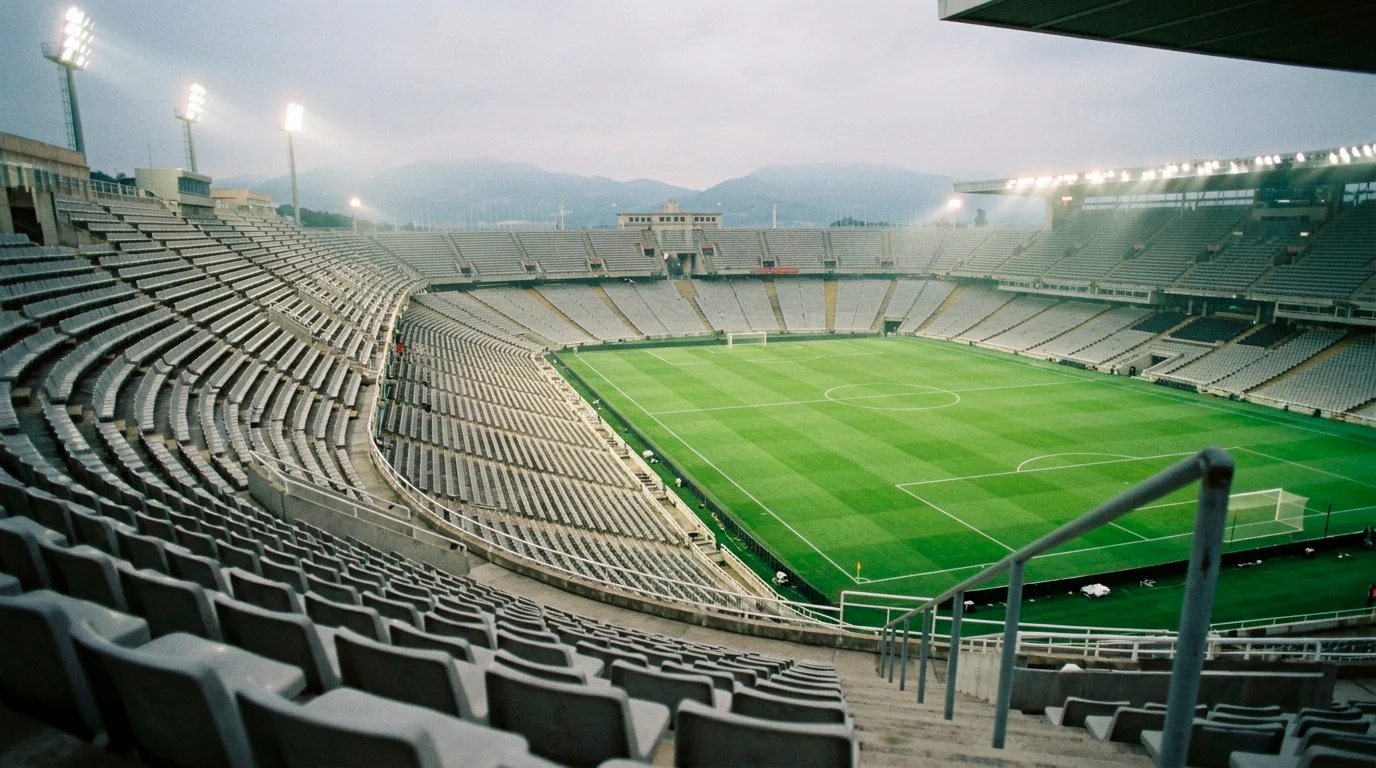
The infrastructure has undergone significant renovation in preparation for 2026, including pitch improvements, new media facilities and upgraded hospitality areas. FIFA inspectors raised concerns about the stadium’s age and facilities during the bidding process, and Mexico’s organising committee invested heavily to bring the Azteca up to modern World Cup standards. The result is a venue that retains its historic character — the steep concrete bowl, the iconic yellow seats, the towering floodlights — while meeting the technical requirements of a 21st-century mega-event.
World Cup History at the Azteca
Walk into the Azteca and you are walking into football’s cathedral. The 1970 World Cup final saw Pele’s Brazil play what many consider the greatest single match in World Cup history — their 4-1 demolition of Italy featured total football before the Dutch had even coined the term, and Carlos Alberto’s fourth goal, a team move involving nine passes and finishing with a thunderbolt from the right-back position, remains the standard against which all World Cup goals are measured. Sixteen years later, the Azteca hosted Maradona’s one-man show against England in the quarter-final — the Hand of God and the Goal of the Century in the same match — before Argentina went on to win the final on the same pitch.
The historical weight of the venue creates an intangible factor that punters should not dismiss. Players know where they are when they step onto the Azteca pitch. For Mexico’s squad, playing the opening match at their spiritual home is the ultimate motivational advantage — it is like the Socceroos playing a World Cup match at the MCG, except the MCG has never hosted a World Cup final. The emotional boost is real and quantifiable: Mexico have won 78% of their competitive matches at the Azteca over the last decade, a home record surpassed by only a handful of national teams worldwide. South Africa, by contrast, have never played a competitive match in Mexico City. The experience gap is vast.
The Opening Match: Mexico vs South Africa (11 June)
The opening match of a World Cup is a unique beast. It receives the largest individual-match television audience of the group stage, it sets the tone for the entire tournament, and it is almost always a cautious, nervy affair where both teams prioritise not losing over winning. Since 2002, opening matches have averaged 1.8 goals — lower than the overall tournament average — and only one (Russia 5-0 Saudi Arabia in 2018) has produced more than three goals. The pattern is clear: opening matches are tight, tactical and low-scoring.
Mexico vs South Africa carries echoes of 2010, when South Africa — as hosts — drew 1-1 with Mexico in the opening match of their home World Cup. The roles are partially reversed here: Mexico are the home side, South Africa the opponents, and the historical symmetry adds narrative weight. Mexico are heavy favourites at approximately 1.65, with South Africa at 5.50 and the draw at 3.60. Those prices look about right, but the value sits in the under 2.5 goals market at around 1.70 — the combination of opening-match caution, altitude effects (more on that below) and Mexico’s tendency to manage games rather than blow opponents away makes a low-scoring affair the most probable outcome.
The AEST kick-off for the opening match will depend on the exact local time chosen by FIFA, but a likely 5pm or 6pm local start translates to approximately 8am or 9am AEST on Thursday 12 June — a breakfast viewing session to launch the tournament. The timing works perfectly for Australian punters wanting to start the World Cup with a bet and a coffee before the workday begins.
The Altitude Factor: 2,200 Metres and What It Means for Betting
Here is the detail that separates casual fans from sharp punters: the Estadio Azteca sits at 2,200 metres above sea level, making it by far the highest-altitude venue in the 2026 World Cup. For context, the next highest venue is the Estadio Akron in Guadalajara at approximately 1,500 metres. Most other World Cup stadiums sit below 200 metres. The altitude difference is enormous, and its effects on football are well-documented and directly relevant to betting markets.
At 2,200 metres, air density is approximately 20% lower than at sea level. This has three measurable effects on the game. First, the ball travels faster through the air — shots are harder to save, long passes arrive sooner than expected, and goalkeepers must adjust their positioning to account for balls that dip less and carry further. Historical data from Liga MX shows that the average goals per game at the Azteca is 2.8, compared to 2.5 at sea-level Mexican venues — a difference directly attributable to the ball’s altered flight characteristics. Second, players who are not acclimatised to altitude experience reduced aerobic capacity. Visiting teams typically show a measurable decline in high-intensity running after the 60th minute, as their bodies struggle to process oxygen efficiently. Mexico’s players, many of whom train regularly at altitude, have a significant physiological advantage that compounds with match time. Third, the reduced air resistance affects free kicks and long-range shots — curling efforts move differently, and the knuckleball technique becomes more effective because the ball’s trajectory is less predictable in thinner air.
For punters, the altitude factor translates into actionable market plays. Matches at the Azteca are statistically more likely to produce late goals (after 70 minutes) as visiting teams fatigue. The over 2.5 goals market tends to hit more frequently at altitude venues. And Mexico’s home advantage, already strong in terms of crowd support, is amplified by the physiological toll on opponents who have not acclimatised. South Africa will have prepared for the altitude — their squad was scheduled to arrive in Mexico City at least a week before the opener — but preparation and acclimatisation are not the same thing. The body takes 10-14 days to fully adjust to 2,200 metres, and most teams cannot afford that much pre-tournament preparation time at a single venue.
Aussie Punter’s Notes
The Azteca will not host any Socceroos matches — Australia plays exclusively on the US West Coast in Group D — but the venue’s results matter for punters building multi-bets or tracking tournament-wide trends. Mexico’s group matches at the Azteca and at Monterrey’s Estadio BBVA will help establish whether the co-hosts are genuine contenders or group-stage merchants, and the altitude-driven scoring patterns at the Azteca will inform your approach to goal markets across all three Mexican venues.
My recommendation: use the opening match as a data point rather than a major betting event. The first match of a World Cup is notoriously difficult to predict because there is zero in-tournament form to reference, and the nerves and pageantry surrounding the occasion introduce more randomness than any analytical model can account for. Take the under 2.5 goals if the price is right, sit back with your breakfast, and let the World Cup wash over you. The serious punting starts when we have matchday-one results to work with. For how the Azteca fits into the broader picture of all sixteen World Cup stadiums and their betting implications, explore the complete stadiums and venues guide.
